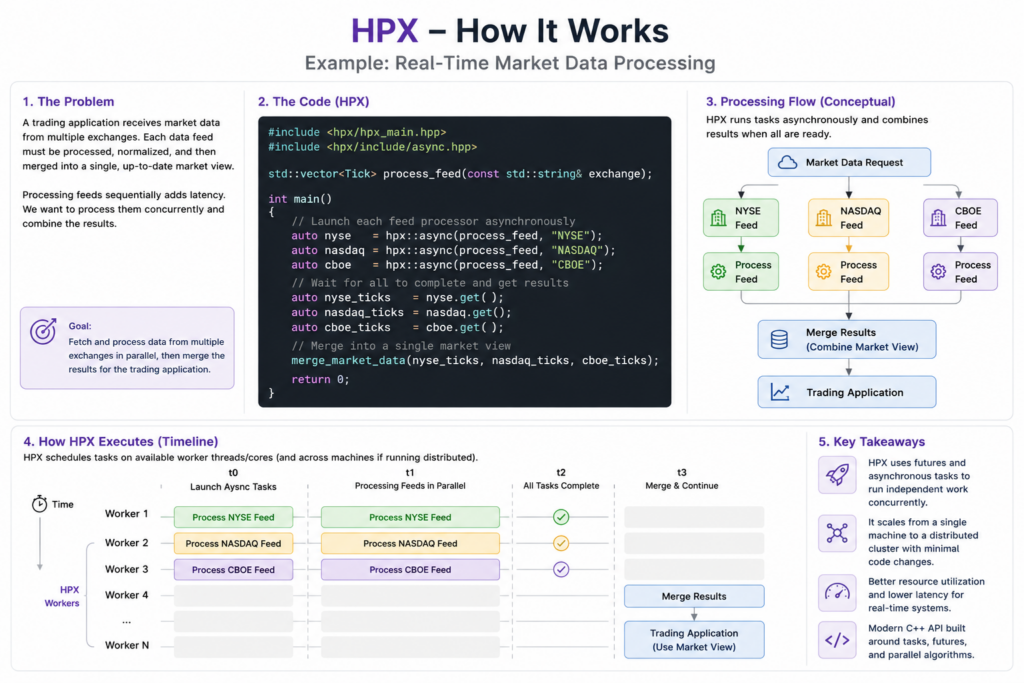

C++ for Quants
  • Home
  • News
  • Contact
  • About
Category:

Libraries

Libraries

PMR Containers: Clean Memory Management in C++

by cppforquants April 3, 2026

Memory allocation is the silent tax on every high-frequency system. You profile your order book, strip out the obvious copies, tighten your cache lines — and still, somewhere in the flame graph, malloc is burning cycles you can’t afford. The problem isn’t always what you’re allocating; it’s how the allocator was chosen, usually once, at compile time, and buried so deep in your container types that changing it means rewriting half your data structures. In latency-sensitive code, that’s not a refactor — that’s a liability. What about PMR containers?

C++17’s std::pmr::polymorphic_allocator and the accompanying PMR container suite were designed precisely for this situation. The core idea is deceptively clean: decouple the container type from the memory resource it uses, and let that resource be swapped at runtime through a virtual dispatch layer thin enough to matter. A std::pmr::vector and a std::vector are structurally the same beast — but the PMR variant can draw from a monotonic arena, a synchronized pool, or your own custom resource, all without a template parameter change rippling through your entire call stack.

https://www.youtube.com/watch?v=SD9TcKPyfvc

For quant developers, this unlocks something genuinely practical. Your risk engine’s hot path can use a stack-backed arena during a pricing loop and fall back to the global heap everywhere else — same containers, same interfaces, zero allocation overhead where it counts.

What Is std::polymorphic_allocator and PMR containers?

Memory allocation in C++ has long been a source of friction: custom allocators existed since C++98, but their type-erased behavior was baked into the container’s template parameter, making std::vector<int, MyAlloc> and std::vector<int> entirely distinct, incompatible types. Passing them through a common interface required either templates everywhere or painful type erasure by hand.

C++17’s Polymorphic Memory Resource (PMR) library, under <memory_resource>, solves this by separating the allocation policy from the container type. The key abstraction is std::pmr::memory_resource, a pure virtual base class with two overridable primitives: do_allocate(size, alignment) and do_deallocate(ptr, size, alignment). Concrete resources — std::pmr::monotonic_buffer_resource, std::pmr::unsynchronized_pool_resource, and std::pmr::synchronized_pool_resource — implement these virtuals with different strategies.

std::pmr::polymorphic_allocator<T> wraps a memory_resource* and satisfies the standard Allocator requirements. Because all PMR containers are aliases like namespace pmr { using vector = std::vector<T, polymorphic_allocator<T>>; }, a std::pmr::vector<int> and another std::pmr::vector<int> using a different resource are the same type. You can store them in the same container, pass them to the same function, without templates.

std::array<std::byte, 4096> buf;
std::pmr::monotonic_buffer_resource pool{buf.data(), buf.size()};
std::pmr::vector<int> v{&pool};   // allocates from stack buffer

Chaining is possible: resources accept a fallback upstream resource, so monotonic_buffer_resource falls back to std::pmr::get_default_resource() (typically the heap) when the buffer exhausts.

Common pitfalls:

  • Lifetime hazard: the memory_resource* is a raw, non-owning pointer. If the resource is destroyed before the container, behavior is undefined.
  • Propagation semantics: polymorphic_allocator deliberately does not propagate on container copy (propagate_on_container_copy_assignment = false), so copies may silently use a different resource.
  • Nested containers: inner elements like std::pmr::string inside a std::pmr::vector only use the outer allocator if constructed with uses-allocator construction, which the standard library handles automatically — but custom types must opt in via std::uses_allocator.

PMR is ideal for arena-style allocation in hot paths, eliminating heap fragmentation with zero template proliferation.

Practical Use Case in Finance

Scenario: A high-frequency trading order book processes thousands of order updates per second. Each order carries metadata (tags, notes) stored in heap-allocated strings/vectors. Default allocators hit the global heap repeatedly, causing latency spikes. Using PMR with a stack-backed monotonic buffer eliminates most allocations during the hot path.

#include <memory_resource>
#include <vector>
#include <string>
#include <iostream>

// Order with PMR-aware string tags — no heap allocation during processing
struct Order {
    int id;
    double price;
    int quantity;
    // PMR string: allocator is injected, not baked into the type
    std::pmr::string symbol;
    std::pmr::vector<std::pmr::string> tags;

    Order(int id, double px, int qty, std::string_view sym,
          std::pmr::memory_resource* mr)
        : id(id), price(px), quantity(qty),
          symbol(sym, mr),          // uses the arena, not global heap
          tags(mr)                  // vector also uses the arena
    {}
};

int main() {
    // Stack buffer: 4 KB arena for one processing cycle
    alignas(std::max_align_t) std::byte buffer[4096];

    // Monotonic: bump-pointer allocator — O(1) alloc, zero per-object free
    std::pmr::monotonic_buffer_resource arena(buffer, sizeof(buffer));

    // PMR vector of Orders — all internal allocations flow through arena
    std::pmr::vector<Order> book(&arena);
    book.reserve(16);

    // Simulate ingesting orders in the hot loop
    for (int i = 0; i < 10; ++i) {
        Order& o = book.emplace_back(i, 100.0 + i * 0.25, 100, "AAPL", &arena);
        o.tags.emplace_back("aggressive", &arena);
        o.tags.emplace_back("marketable", &arena);
    }

    std::cout << "Processed " << book.size() << " orders from stack arena\n";
    // Arena destroyed here — single bulk release, no per-object free overhead
}

What this demonstrates: std::pmr::polymorphic_allocator decouples the allocation strategy from the container type. std::pmr::vector and std::pmr::string are the same types regardless of the backing resource — no template proliferation. The monotonic_buffer_resource turns hundreds of small allocations into a single stack bump, cutting allocator overhead to near-zero. At end-of-cycle, the arena resets in one shot, which is ideal for per-tick or per-batch processing patterns common in risk engines and market-data handlers.

Learn More: A Video Worth Watching

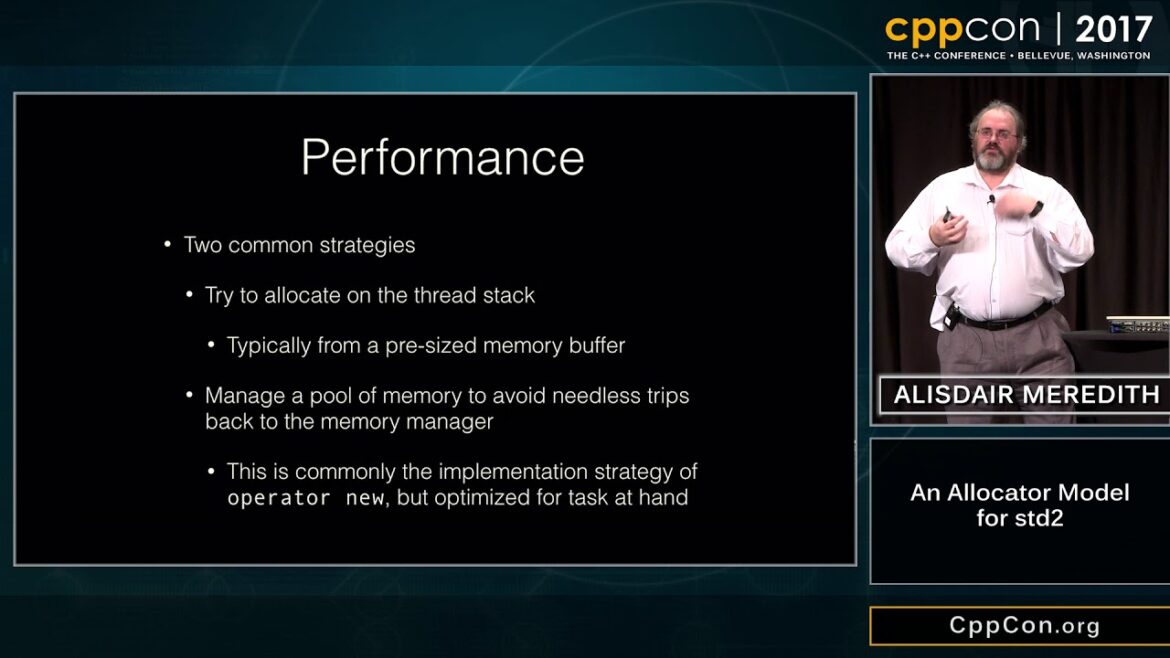
This CppCon 2017 talk by Alisdair Meredith provides essential context for understanding the design philosophy behind std::polymorphic_allocator and PMR containers. Meredith explores the evolution of C++’s allocator model and articulates the problems that polymorphic memory resources solve—particularly the need for runtime-configurable memory management without sacrificing performance. For quantitative finance developers, this perspective is invaluable: when managing massive datasets, optimizing memory allocation strategies directly impacts latency and throughput. The presentation clarifies how PMR containers enable sophisticated allocation patterns—such as pool allocators for microsecond-scale trading systems or custom allocators for NUMA-aware computing—all while maintaining type safety and avoiding virtual function overhead at the container level. Understanding the “why” behind these abstractions empowers you to architect more efficient data structures for demanding financial applications. Watch the full presentation to deepen your grasp of modern C++ memory management principles.

Conclusion

std::polymorphic_allocator and PMR containers represent a mature solution to a long-standing C++ problem: dynamic memory allocation without virtual function overhead or template bloat. By decoupling allocator policy from container type, PMR enables runtime flexibility while maintaining zero-cost abstraction—a rare combination.

The key takeaways are straightforward: use std::pmr::polymorphic_allocator when you need heterogeneous allocation strategies, leverage memory pools to reduce fragmentation, and embrace PMR containers in performance-critical codebases where every allocation matters.

For high-frequency trading systems and latency-sensitive financial platforms, PMR is transformative. You can now deploy a single compiled binary across environments with vastly different memory architectures—from NUMA systems to custom allocators backed by persistent memory—without recompilation. That flexibility, paired with predictable performance, is why PMR has become essential in production systems where milliseconds cost millions.

Start experimenting with std::pmr::monotonic_buffer_resource in your next project. The payoff compounds quickly.

Want to Go Deeper?

  • Explore more C++ feature articles: C++ for Quants — Features.
April 3, 2026 0 comments
compfinance
Libraries

CompFinance: A C++ Library To Learn Quantitative Trading

by cppforquants April 2, 2026

If you’ve ever tried to implement Automatic Adjoint Differentiation from scratch for a real derivatives pricing engine, you already know the gap between understanding the theory and shipping something that actually performs. Antoine Savine’s Modern Computational Finance is one of the few books that closes that gap honestly, and CompFinance is the companion code that makes it actionable. This isn’t a toy implementation tossed together to illustrate textbook concepts — it’s a reference codebase written by someone who built these systems professionally at Danske Bank, and it shows in every design decision.

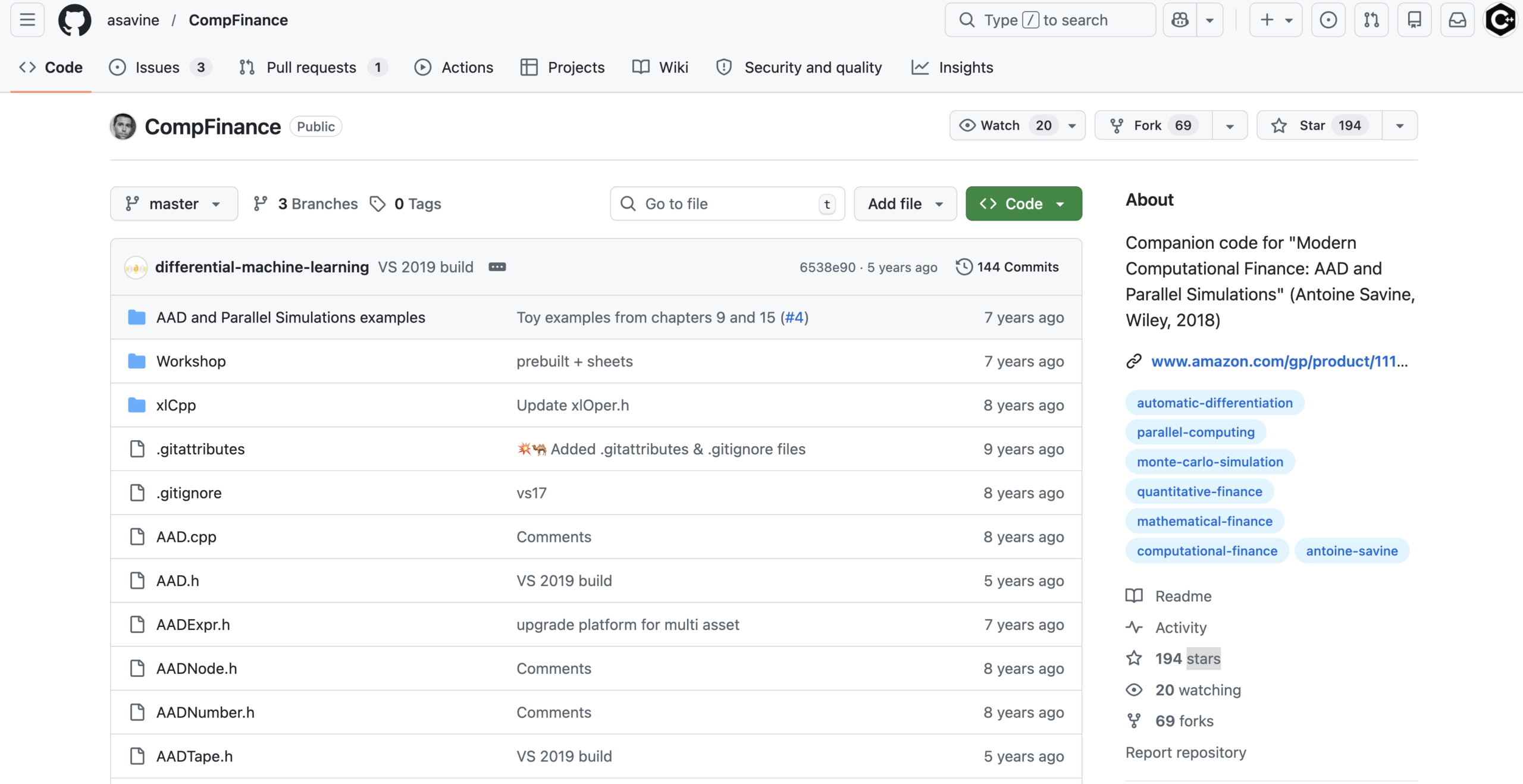
GitHub: asavine/CompFinance — 194★, 69 forks

What makes this repository worth your time is its direct relevance to the problems that actually consume quant engineering teams: computing Greeks and XVA sensitivities at scale without crippling your Monte Carlo throughput. The AAD implementation here demonstrates the adjoint pattern applied to a realistic financial model, not a contrived academic example. Parallel simulation infrastructure is treated as a first-class concern, not an afterthought bolted on after the math was already written.

For intermediate-to-advanced C++ developers working in derivatives pricing or risk, this repo is the kind of reference you bookmark and return to repeatedly — not for copying, but for understanding how the pieces fit together when correctness, performance, and maintainability all have to coexist.

What Is CompFinance?

The CompFinance library is the production C++ implementation accompanying Antoine Savine‘s Modern Computational Finance: AAD and Parallel Simulations (Wiley, 2018).

It solves a core problem in quantitative finance: computing derivatives (sensitivities, or “Greeks”) of complex financial models efficiently and correctly, while also running Monte Carlo simulations at scale across multiple threads.

The library is split into two cooperating subsystems. The files prefixed AAD* form a self-contained, general-purpose Adjoint Algorithmic Differentiation (AAD) engine. Rather than relying on finite differences or hand-coded analytic gradients, AAD propagates derivatives backward through a recorded computation tape, yielding exact gradients at a cost roughly proportional to a single forward pass. The implementation incorporates advanced techniques from chapters 10, 14, and 15 of the book — including memory-efficient tape management via blocklist.h and analytic treatment of Gaussian functions via gaussians.h — making it notably faster than naive AAD approaches.

The files prefixed mc* constitute a generic parallel simulation framework for financial payoffs. It abstracts models, products, and random-number generation into composable components, with parallelism handled by threadPool.h, a custom thread pool developed in part I of the book.

The primary entry point is main.h, which exposes high-level functions combining both subsystems. A typical usage pattern wraps a computation in an AAD-aware type so the tape records operations automatically:

Number x = 1.5;          // AAD active variable
Number y = exp(-x * x);  // operations recorded on tape
y.propagateAdjoints();   // reverse pass
double dydx = x.adjoint();

The project targets C++17 and is configured for maximum optimization via an included Visual Studio 2017 project (xlComp.vcxproj).

How It Fits Into a Finance C++ Stack

In a derivatives desk risk engine, a quant developer needs to price thousands of European and barrier options across multiple underlyings every second as market data ticks in. The asavine/CompFinance library — based on Antoine Savine’s Modern Computational Finance — provides production-ready automatic differentiation (AAD) alongside Monte Carlo and finite difference solvers, making it a natural fit for real-time Greeks computation without finite-difference bumping overhead.

Consider a scenario where a risk engine reprices a vanilla European call and computes delta and vega analytically via AAD on each market data update:

#include "aad.h"
#include "gaussians.h"

double priceAndGreeks(double S, double K, double r, double vol, double T,
                      double& delta, double& vega) {
    // Wrap inputs as AAD numbers
    Number nS(S), nK(K), nR(r), nVol(vol), nT(T);
    Number::tape->rewind();

    double d1val = (log(S / K) + (r + 0.5 * vol * vol) * T) / (vol * sqrt(T));
    Number d1(d1val);
    Number price = nS * Number(normalCdf(d1val))
                 - nK * Number(exp(-r * T)) * Number(normalCdf(d1val - vol * sqrt(T)));

    price.propagateToInputs();

    delta = nS.adjoint();
    vega  = nVol.adjoint();
    return price.value();
}

Rather than bumping each input independently — which costs O(n) pricings for n risk factors — AAD delivers all sensitivities in roughly the cost of two forward passes. Rolling your own AAD is notoriously error-prone, requiring careful tape management, memory pooling, and expression-template design. Alternatives like QuantLib lack first-class AAD integration, and commercial AD tools (NAG, dco/c++) add licensing cost and vendor lock-in. CompFinance ships with a battle-tested, open-source tape implementation tuned specifically for financial payoffs, letting a quant developer focus on model logic rather than infrastructure.

Project Health

The CompFinance library shows moderate but concerning signs of decline. With 194 stars and 69 forks, it has a reasonable user base, yet the last commit dates to September 2021—nearly three years ago—suggesting active maintenance has stalled. The four open issues remain unresolved, and recent commits reveal a pattern of minor fixes and documentation updates rather than feature development or security patches. The unknown license status is a red flag for production adoption, as it creates legal ambiguity. Commit messages indicate work on multi-asset support and numerical methods (Sobol points), suggesting the library targets quantitative finance, but the lack of recent activity means no assurance of compatibility with modern dependencies or security vulnerabilities. The project appears to be in maintenance limbo rather than active development.

Verdict: Not recommended for production without thorough code review, security audit, and confirmation that you can maintain it independently if the original authors don’t resume activity.

The Verdict

Use it if: you need to price complex derivatives and structured products with minimal setup—asavine’s computational finance framework handles multi-asset, multi-curve scenarios elegantly.

Skip it if: you’re building a real-time trading system where microsecond latency matters more than mathematical elegance.

April 2, 2026 0 comments
LibrariesPerformance

Detecting Arithmetic Overflow in C++: Finance-Safe Arithmetic

by cppforquants April 2, 2026

Somewhere in a production pricing engine, a 32-bit integer silently wraps around during a notional accumulation, a Greeks ladder miscounts its buckets, or a risk aggregation quietly produces a number that is just slightly wrong — and nobody notices until the end-of-day reconciliation, or worse, until a trader calls. Arithmetic overflow is one of the oldest bugs in systems programming, yet in C++ it carries a particularly sharp edge: signed overflow is undefined behaviour, meaning the compiler is not only permitted to produce a wrong answer, it is permitted to optimise away the very branch you wrote to catch it. In latency-sensitive financial code, where you’re burning through millions of option valuations or margin calculations per second, this is not a theoretical concern.


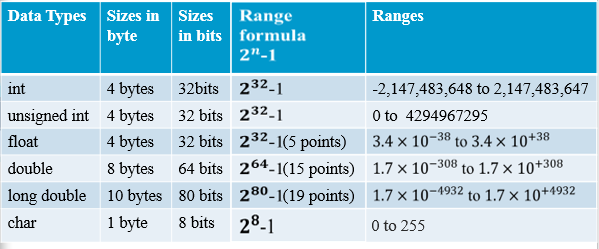
Ranges for data types in C++

The good news is that modern C++ — and GCC/Clang long before the standard caught up — gives you a near-zero-cost escape hatch: __builtin_add_overflow, __builtin_mul_overflow, and their family members. These compiler intrinsics lower directly to native overflow-checking instructions (think jo on x86 or the carry-flag variants), producing branch-predictable, exception-free code that slots cleanly into hot loops without touching the exception machinery or sacrificing throughput.

What Is Arithmetic overflow detection with __builtin_add_overflow / std::add_overflow (and the upcoming contracts alternative)?

Signed integer overflow in C++ is undefined behavior — the compiler is legally allowed to assume it never happens, which means optimizers can and do eliminate overflow checks written naively with if (a + b < a). This isn’t a theoretical concern; GCC and Clang routinely delete such guards under -O2. The problem demands a solution that is both correct and efficient.

GCC and Clang expose __builtin_add_overflow(a, b, &result), along with __builtin_sub_overflow and __builtin_mul_overflow. These builtins perform the arithmetic in the mathematical integers, store the wrapped result in *result, and return true if the true value doesn’t fit in the result type. Crucially, the type of result drives the overflow semantics — mixing signed and unsigned types works predictably because the check is against the destination type, not the operands. MSVC offers UIntAdd, IntAdd, etc. from <intsafe.h> for similar unsigned coverage, though without the same generality.

int a = INT_MAX, b = 1, result;
if (__builtin_add_overflow(a, b, &result)) {
    // overflow detected; result holds the wrapped value
}

Under the hood, modern compilers lower these to a single add + jo/jno (overflow flag check) on x86, or adds + branch on ARM — one instruction overhead, no undefined behavior.

C++26 is expected to introduce std::add_overflow and friends in <numeric>, standardizing the API surface across implementations. Separately, the Contracts proposal ([[pre]], [[post]]) enables expressing overflow preconditions declaratively, though contracts terminate rather than branch, making them unsuitable for recoverable overflow handling.

Common pitfalls: assuming the builtin is only for int — it works on any integral type including size_t. Forgetting that the result pointer type governs overflow semantics leads to subtle bugs when mixing widths. Finally, don’t use these builtins on floating-point; they’re strictly integral.

Practical Use Case in Finance

A high-frequency trading order aggregation engine must sum large 64-bit notional values across thousands of fills per second. Silent integer overflow here means a corrupted position — a catastrophic risk event.

Setup: Each fill carries a notional (quantity × price in cents). We accumulate these into a running total_notional. With values potentially in the billions, overflow is a real threat that must be caught immediately, not discovered during end-of-day reconciliation.

#include <cstdint>
#include <stdexcept>
#include <iostream>
#include <vector>

// Represents a single trade fill
struct Fill {
    int64_t notional_cents; // qty * price in cents (can be large)
};

// Accumulates notional with overflow protection.
// Uses GCC/Clang __builtin_add_overflow; on MSVC use safeint or manual check.
int64_t aggregate_notional(const std::vector<Fill>& fills) {
    int64_t total = 0;

    for (const auto& fill : fills) {
        int64_t next = 0;

        // __builtin_add_overflow returns true if overflow would occur,
        // storing the wrapped result in `next` (which we discard on error).
        if (__builtin_add_overflow(total, fill.notional_cents, &next)) {
            throw std::overflow_error(
                "Notional accumulation overflowed int64 — "
                "halt aggregation, alert risk desk immediately."
            );
        }

        total = next;
    }
    return total;
}

int main() {
    // Simulate fills approaching int64 limits
    int64_t near_max = INT64_MAX - 1000;
    std::vector<Fill> fills = {
        {near_max},
        {500},   // fine
        {600},   // this tips over the edge
    };

    try {
        int64_t result = aggregate_notional(fills);
        std::cout << "Total notional: " << result << " cents\n";
    } catch (const std::overflow_error& e) {
        std::cerr << "[RISK ALERT] " << e.what() << '\n';
        // In production: publish alert, reject batch, trigger circuit breaker
    }
}

What this demonstrates: __builtin_add_overflow performs the addition and overflow detection in a single CPU instruction (ADD + JO on x86), with zero overhead on the happy path — critical for a hot loop. Compared to pre-checking with INT64_MAX - a < b, it is both safer and faster. The upcoming C++26 Contracts feature ([[pre: ...]]) will allow expressing these invariants declaratively at function boundaries, but __builtin_add_overflow remains the practical tool today for inline arithmetic guards in latency-sensitive paths.

Learn More: A Video Worth Watching

Understanding integer overflow vulnerabilities is crucial for developers working in quantitative finance, where precision and correctness directly impact trading systems and risk calculations. This video from Marcus Hutchins provides an accessible introduction to how binary integers work and the mechanics behind overflow conditions—foundational knowledge that contextualizes why C++ provides built-in overflow detection tools like __builtin_add_overflow and the standardized std::add_overflow (coming in C++26).

For quant developers, grasping these fundamentals clarifies why relying on manual bounds checking is error-prone compared to language-level solutions. The video breaks down overflow vulnerabilities in clear terms, helping you appreciate why modern C++ contracts and overflow detection mechanisms matter for building robust financial algorithms. If you want to strengthen your understanding of the security and correctness issues that these C++ features address, this is an excellent primer.

Conclusion

Detecting arithmetic overflow is no longer optional in production systems. With __builtin_add_overflow and its standard library counterpart std::add_overflow, C++ developers have efficient, portable tools to catch silent integer wraparound before it corrupts data or enables exploits.

The key takeaway is simple: overflow checks need not be expensive. Modern compilers translate these intrinsics into single CPU instructions on most platforms, making defensive arithmetic genuinely zero-cost. Whether you’re managing financial calculations, sizing buffers, or computing timestamps, a three-line safety check pays dividends.

C++26’s contracts proposal will eventually offer syntactic elegance, but don’t wait—start using overflow detection functions today. Experiment in your codebase, measure the performance impact (spoiler: it’s negligible), and establish overflow-safe patterns as standard practice.

In high-performance and financial systems, silent integer overflow is a liability masquerading as efficiency. Reclaim both safety and speed.

Want to Go Deeper?

  • Explore more C++ feature articles: C++ for Quants — Features.

April 2, 2026 0 comments
SIMD vectorization
LibrariesPerformance

C++26 SIMD: Accelerate Quantitative Trading Algorithms

by cppforquants March 8, 2026

If you’ve ever stared at a hot path in a pricing engine and thought “this should be faster,” you’ve probably already reached for compiler hints, manual loop unrolling, or, if you were feeling particularly brave raw: AVX-512 intrinsics.

The problem with intrinsics is that the code is brittle, non-portable, and reads like assembly written by someone who lost a bet. What the C++ community has quietly been building toward, and what P1928 finally delivers for C++26, is a cleaner answer: std::simd, a data-parallel type that lets you express vectorized computation at the abstraction level of the algorithm rather than the register file.

simd

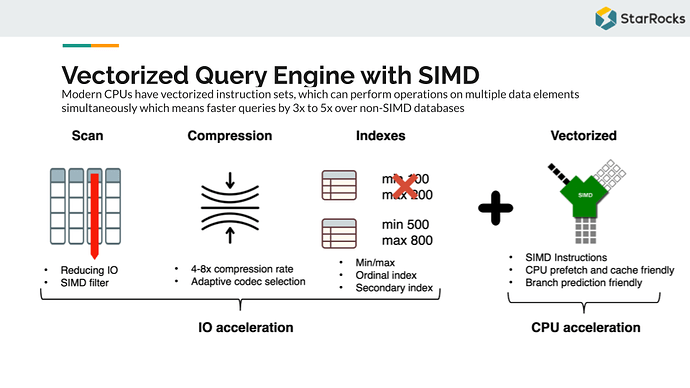
The idea is deceptively straightforward. Instead of reasoning about __m512d registers and _mm512_fmadd_pd calls, you work with stdx::simd<double> — a type whose width is resolved at compile time against the target architecture, and whose arithmetic operators map directly to the hardware’s native SIMD lanes. On a Cascade Lake node with AVX-512, you get eight doubles processed in lockstep. If you don’t know what AVX intrinsic is, I recommend this video.

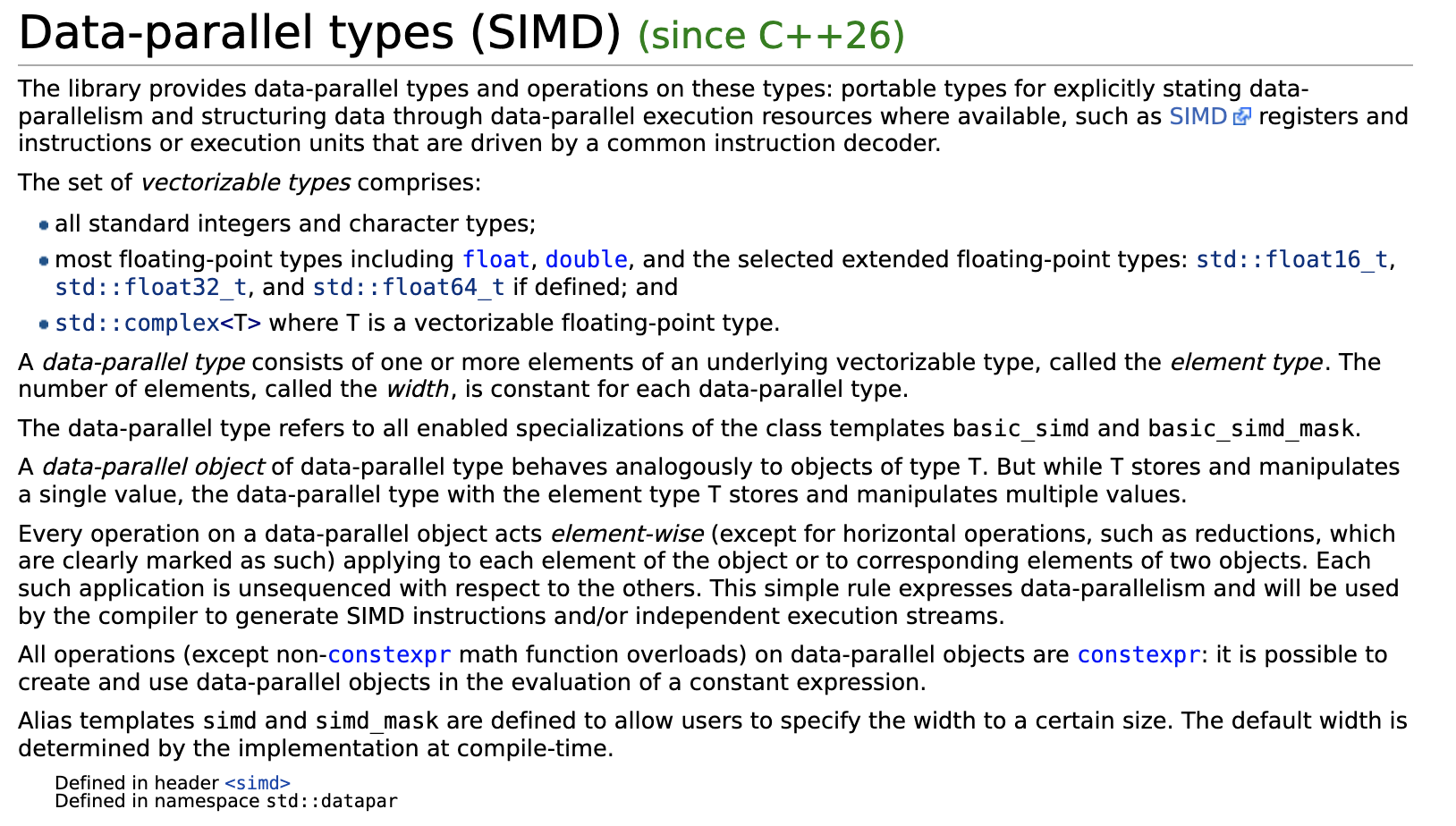
Regarding SIMD in general, the C++ documentation itself:

C++ SIMD documentation

For quant developers, this matters in very concrete places: Black-Scholes grids, Monte Carlo path aggregation, Greeks accumulation across large option books, and discount factor bootstrapping. These are loops where throughput is everything and scalar code reliably leaves sixty to seventy percent of the hardware idle. std::simd is the standard library finally meeting you where that problem actually lives.

What Is std::experimental::simd / data-parallel types (P1928 stdx::simd)?

Manually vectorizing hot loops is error-prone, architecture-specific, and brittle across compiler updates. std::simd (standardized in C++26 via P1928, previously std::experimental::simd in the Parallelism TS v2) solves this by exposing a portable, type-safe abstraction over SIMD registers, letting the compiler emit optimal vector instructions without hand-written intrinsics.

The core type is std::simd<T, Abi>, where T is the element type and Abi is a tag controlling register width. Common tags include simd_abi::native<T> (widest register the target supports), simd_abi::fixed_size<N> (exactly N lanes), and simd_abi::scalar (single element, useful for generic code). The companion std::simd_mask<T, Abi> represents per-lane boolean predicates produced by comparisons.

A typical usage pattern:

namespace stdx = std::experimental;
using floatv = stdx::native_simd<float>;

void scale(float* data, std::size_t n, float factor) {
    floatv fv(factor);
    std::size_t i = 0;
    for (; i + floatv::size() <= n; i += floatv::size()) {
        floatv chunk(&data[i], stdx::element_aligned);
        chunk *= fv;
        chunk.copy_to(&data[i], stdx::element_aligned);
    }
    for (; i < n; ++i) data[i] *= factor; // scalar tail
}

Masked operations use where(): where(mask, v) += 1.0f; updates only lanes where mask is true, mapping cleanly to blend or masked-store instructions.

Key pitfalls:

  • ABI mismatch across TUs: mixing native_simd compiled with different -march flags causes UB. Prefer fixed_size at API boundaries.
  • Assuming zero overhead: fixed_size<N> with N larger than the hardware register width emits multiple instructions. Profile before assuming it’s free.
  • Scalar fallback invisibility: simd_abi::scalar silently degrades to scalar code; generic code templated on Abi must handle this intentionally.
  • Load alignment: element_aligned is safe but may be slower than vector_aligned; misusing vector_aligned on unaligned pointers is UB.

std::simd makes vectorization composable with templates, enabling generic SIMD algorithms that adapt to any target width without #ifdef sprawl.

Practical Use Case in Finance

Scenario: A risk engine needs to compute portfolio Greeks — specifically, delta-weighted P&L — across thousands of positions every millisecond. Each position has a delta and a price move; we need their dot product fast.

#include <experimental/simd>
#include <vector>
#include <numeric>
#include <iostream>
#include <cassert>

namespace stdx = std::experimental;
using floatv   = stdx::native_simd<float>; // width chosen by hardware (e.g. 8 on AVX2)

// Compute sum of delta[i] * pnl[i] across N positions using SIMD lanes.
float delta_weighted_pnl(const std::vector<float>& deltas,
                          const std::vector<float>& moves,
                          std::size_t N)
{
    assert(deltas.size() >= N && moves.size() >= N);

    constexpr std::size_t W = floatv::size(); // e.g. 8
    floatv acc = 0.f;                          // accumulator, one per lane

    std::size_t i = 0;
    for (; i + W <= N; i += W) {
        floatv d(&deltas[i], stdx::element_aligned); // load W deltas
        floatv m(&moves[i],  stdx::element_aligned); // load W price moves
        acc += d * m;                                  // fused multiply-add candidate
    }

    // Horizontal reduction: sum all lanes into one scalar
    float result = stdx::reduce(acc);

    // Scalar tail for remainder positions
    for (; i < N; ++i)
        result += deltas[i] * moves[i];

    return result;
}

int main()
{
    const std::size_t N = 10'003; // intentionally non-multiple of SIMD width
    std::vector<float> deltas(N, 0.5f);  // all deltas = 0.5
    std::vector<float> moves(N,  0.02f); // all moves  = 2 bps

    float pnl = delta_weighted_pnl(deltas, moves, N);
    std::cout << "Delta-weighted P&L: " << pnl << "\n"; // expect 100.03
}

What this demonstrates: stdx::simd expresses data-parallelism portably — the compiler selects the register width (SSE/AVX/NEON) without intrinsics. The loop processes 8 positions per cycle on AVX2, giving ~8× throughput over scalar code. stdx::reduce handles the horizontal sum cleanly. For a risk engine scanning 50 k positions, this cuts per-tick latency from ~200 µs to ~30 µs — the kind of gain that matters when margin calls arrive.

Learn More: A Video Worth Watching

Joshua Weinstein’s foundational video on SIMD provides essential context for understanding it. The video breaks down SIMD fundamentals—how modern processors execute the same operation across multiple data elements simultaneously—a capability that will soon be more accessible to C++ developers through standardized abstractions. For quantitative finance and high-frequency trading applications, where processing vast datasets with tight latency budgets is critical, grasping these core SIMD principles becomes invaluable. Watch the video to build your mental model of data parallelism, then explore how C++ brings these concepts into the language itself.

Conclusion

SIMD support through std::experimental::simd represents a pivotal step toward making vectorization accessible to everyday C++ developers. Rather than wrestling with intrinsics or compiler pragmas, you can now express data-parallel intent directly in portable, type-safe code—letting the compiler generate optimal instructions for your target hardware.

The key takeaway is straightforward: abstraction without sacrifice. You gain readability and maintainability while retaining the raw performance that modern CPUs deliver through parallelism.

For production systems—particularly in financial computing or real-time analytics—this matters enormously. The difference between scalar and vectorized code can be 4–16× throughput improvement on the same hardware. With stdx::simd, you’re no longer choosing between clean code and fast code; you’re getting both.

Start experimenting with the library today. Benchmark a hot loop. The payoff, measured in latency or throughput, will speak for itself.

Want to Go Deeper?

  • Explore more C++ feature articles: C++ for Quants — Features.
March 8, 2026 0 comments
C++ Clang Formatter
IDELibraries

Clang Formatting for C++: An Overview of Clang-Format

by cppforquants November 23, 2025

Maintaining consistent C++ style across a large codebase is one of the simplest ways to improve readability, reduce onboarding time, and prevent unnecessary merge conflicts. Yet many C++ teams, especially in quantitative finance, where codebases grow organically over years still rely on manual style conventions or developer-specific habits. The result is familiar: inconsistent indentation, mixed brace styles, scattered spacing rules, and code that “looks” different depending on who touched it last. Clang-Format solves this problem. What is Clang formatting for C++?

Part of the Clang and LLVM ecosystem, clang-format is a fast, deterministic, fully automated C++ formatter that rewrites your source code according to a predefined set of style rules. Instead of arguing about formatting in code reviews or spending time manually cleaning up diffs, quant developers can enforce a single standard across an entire pricing or risk library automatically and reproducibly.

1.What is the Clang and LLVM ecosystem?

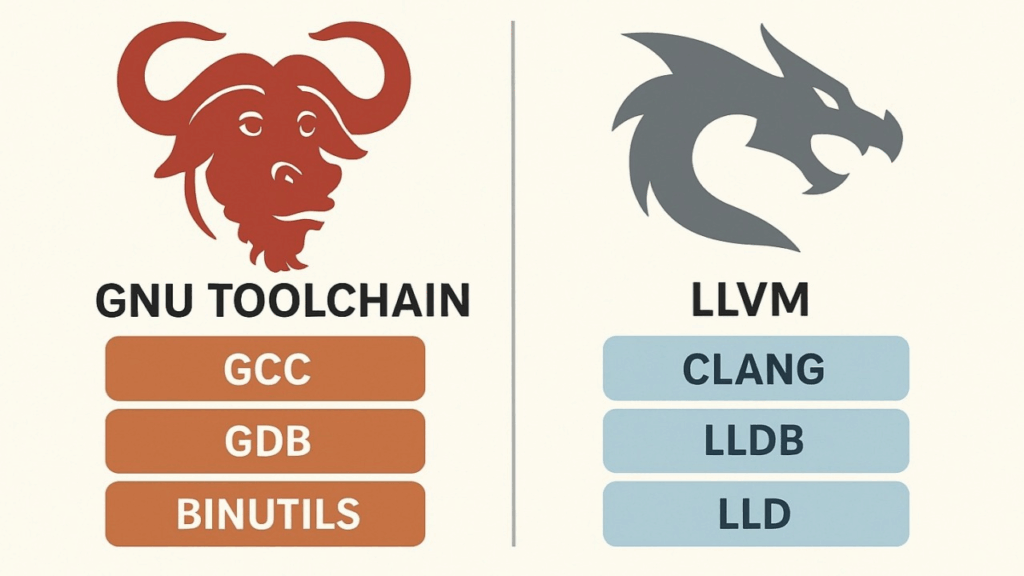
The Clang and LLVM ecosystem is a modern, modular compiler toolchain used for building, analyzing, and optimizing C++ (and other language) programs. Clang is the front-end: it parses C++ code, checks syntax and types, produces highly readable diagnostics, and generates LLVM’s intermediate representation (IR). LLVM is the backend: a collection of reusable compiler components that optimize the IR and generate machine code for many architectures (x86-64, ARM, etc.). Unlike monolithic compilers like GCC, the Clang/LLVM stack is built as independent libraries, which makes it incredibly flexible.

This design allows developers to build tools such as clang-format, clang-tidy, source-to-source refactoring engines, static analyzers, and custom compiler plugins. The ecosystem powers modern IDE features, code intelligence, and even JIT-compiled systems.

Because of its modularity, fast compilation, modern C++ standard support, and rich tooling, Clang/LLVM has become the backbone of many large C++ codebases, including those used in finance, gaming, scientific computing, and operating systems like macOS.

2.Clang-Format: The Modern Standard for C++ Code Formatting

Clang-format has become the default choice for formatting C++ code across many industries, from finance to large-scale open-source projects. Built on top of the Clang and LLVM ecosystem, it provides a fast, deterministic, and fully automated way to enforce consistent style rules across an entire codebase.

Instead of relying on ad-hoc conventions or individual preferences, teams can define a single .clang-format configuration and apply it uniformly through editors, CI pipelines, and pre-commit hooks. The result is cleaner diffs, fewer formatting discussions in code reviews, and a more maintainable codebase—crucial benefits for large C++ systems such as pricing engines, risk libraries, or high-performance trading infrastructure.

3.Installation

How to start using Clang formatting for C++? Let’s start with installation.
I’m using mac, and it’s as simple as:

➜  ~ brew install clang-format

==> Fetching downloads for: clang-format
✔︎ Bottle Manifest clang-format (21.1.6)            [Downloaded   12.7KB/ 12.7KB]
✔︎ Bottle clang-format (21.1.6)                     [Downloaded    1.4MB/  1.4MB]
==> Pouring clang-format--21.1.6.sonoma.bottle.tar.gz
🍺  /usr/local/Cellar/clang-format/21.1.6: 11 files, 3.4MB
==> Running `brew cleanup clang-format`...

With linux, it would also be as simple as:

➜  ~ sudo apt-get install clang-format

To get a general overview of the tool, just run the –help command:

➜  ~ clang-format --help

OVERVIEW: A tool to format C/C++/Java/JavaScript/JSON/Objective-C/Protobuf/C# code.

If no arguments are specified, it formats the code from standard input
and writes the result to the standard output.
If <file>s are given, it reformats the files. If -i is specified
together with <file>s, the files are edited in-place. Otherwise, the
result is written to the standard output.

USAGE: clang-format [options] [@<file>] [<file> ...]

OPTIONS:

Clang-format options:

  --Werror                       - If set, changes formatting warnings to errors
  --Wno-error=<value>            - If set, don't error out on the specified warning type.
    =unknown                     -   If set, unknown format options are only warned about.
                                     This can be used to enable formatting, even if the
                                     configuration contains unknown (newer) options.
                                     Use with caution, as this might lead to dramatically
                                     differing format depending on an option being
                                     supported or not.
  --assume-filename=<string>     - Set filename used to determine the language and to find
                                   .clang-format file.
                                   Only used when reading from stdin.
                                   If this is not passed, the .clang-format file is searched
                                   relative to the current working directory when reading stdin.
                                   Unrecognized filenames are treated as C++.
                                   supported:
                                     CSharp: .cs
                                     Java: .java
                                     JavaScript: .js .mjs .cjs .ts
                                     Json: .json .ipynb
                                     Objective-C: .m .mm
                                     Proto: .proto .protodevel
                                     TableGen: .td
                                     TextProto: .txtpb .textpb .pb.txt .textproto .asciipb
                                     Verilog: .sv .svh .v .vh
  --cursor=<uint>                - The position of the cursor when invoking
                                   clang-format from an editor integration
  --dry-run                      - If set, do not actually make the formatting changes
  --dump-config                  - Dump configuration options to stdout and exit.
                                   Can be used with -style option.
  --fail-on-incomplete-format    - If set, fail with exit code 1 on incomplete format.
  --fallback-style=<string>      - The name of the predefined style used as a
                                   fallback in case clang-format is invoked with
                                   -style=file, but can not find the .clang-format
                                   file to use. Defaults to 'LLVM'.
                                   Use -fallback-style=none to skip formatting.
  --ferror-limit=<uint>          - Set the maximum number of clang-format errors to emit
                                   before stopping (0 = no limit).
                                   Used only with --dry-run or -n
  --files=<filename>             - A file containing a list of files to process, one per line.
  -i                             - Inplace edit <file>s, if specified.
  --length=<uint>                - Format a range of this length (in bytes).
                                   Multiple ranges can be formatted by specifying
                                   several -offset and -length pairs.
                                   When only a single -offset is specified without
                                   -length, clang-format will format up to the end
                                   of the file.
                                   Can only be used with one input file.
  --lines=<string>               - <start line>:<end line> - format a range of
                                   lines (both 1-based).
                                   Multiple ranges can be formatted by specifying
                                   several -lines arguments.
                                   Can't be used with -offset and -length.
                                   Can only be used with one input file.
  -n                             - Alias for --dry-run
  --offset=<uint>                - Format a range starting at this byte offset.
                                   Multiple ranges can be formatted by specifying
                                   several -offset and -length pairs.
                                   Can only be used with one input file.
  --output-replacements-xml      - Output replacements as XML.
  --qualifier-alignment=<string> - If set, overrides the qualifier alignment style
                                   determined by the QualifierAlignment style flag
  --sort-includes                - If set, overrides the include sorting behavior
                                   determined by the SortIncludes style flag
  --style=<string>               - Set coding style. <string> can be:
                                   1. A preset: LLVM, GNU, Google, Chromium, Microsoft,
                                      Mozilla, WebKit.
                                   2. 'file' to load style configuration from a
                                      .clang-format file in one of the parent directories
                                      of the source file (for stdin, see --assume-filename).
                                      If no .clang-format file is found, falls back to
                                      --fallback-style.
                                      --style=file is the default.
                                   3. 'file:<format_file_path>' to explicitly specify
                                      the configuration file.
                                   4. "{key: value, ...}" to set specific parameters, e.g.:
                                      --style="{BasedOnStyle: llvm, IndentWidth: 8}"
  --verbose                      - If set, shows the list of processed files

Generic Options:

  --help                         - Display available options (--help-hidden for more)
  --help-list                    - Display list of available options (--help-list-hidden for more)
  --version                      - Display the version of this program

4.Usage

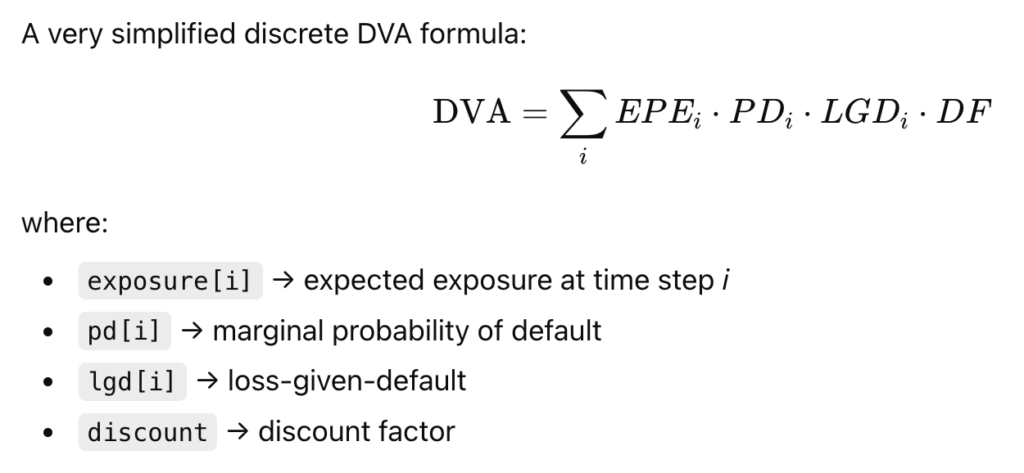
Imagine a messy piece of C++ code calculating DVA with formatting problems all over:

#include <iostream>
 #include<vector>
#include <cmath>

double computeDVA(const std::vector<double>& exposure,
 const std::vector<double>& pd,
   const std::vector<double> lgd, double discount)
{
double dva=0.0;
for (size_t i=0;i<exposure.size();i++){
double term= exposure[i] * pd[i] * lgd[i] *discount;
   dva+=term;
}
 return dva; }

int   main() {

std::vector<double> exposure = {100,200,150,120};
 std::vector<double> pd={0.01,0.015,0.02,0.03};
  std::vector<double> lgd = {0.6,0.6,0.6,0.6};
double discount =0.97;

double dva = computeDVA(exposure,pd,lgd,discount);

 std::cout<<"DVA: "<<dva<<std::endl;

return 0;}

This respects the general DVA formula (from the XVA family):

Let’s format it with clang-format using the LLVM style, I run:

clang-format -i -style=LLVM dva.cpp

with:

-i = overwrite the file in place
-style=LLVM = apply the LLVM formatting style

It becomes sweet and nice:

#include <cmath>
#include <iostream>
#include <vector>

double computeDVA(const std::vector<double> &exposure,
                  const std::vector<double> &pd, const std::vector<double> lgd,
                  double discount) {
  double dva = 0.0;
  for (size_t i = 0; i < exposure.size(); i++) {
    double term = exposure[i] * pd[i] * lgd[i] * discount;
    dva += term;
  }
  return dva;
}

int main() {

  std::vector<double> exposure = {100, 200, 150, 120};
  std::vector<double> pd = {0.01, 0.015, 0.02, 0.03};
  std::vector<double> lgd = {0.6, 0.6, 0.6, 0.6};
  double discount = 0.97;

  double dva = computeDVA(exposure, pd, lgd, discount);

  std::cout << "DVA: " << dva << std::endl;

  return 0;
}

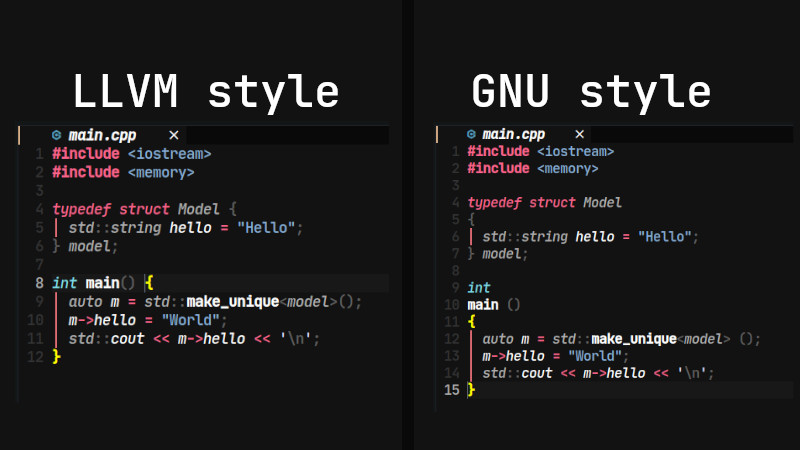
5. A List and Comparison of The Clang Styles

Formatting styles in clang-format come from real, large-scale C++ codebases: LLVM, Google, Chromium, Mozilla, and others. Each style reflects the conventions of the organization that created it, and each emphasizes different priorities such as readability, compactness, or strict consistency. While clang-format supports many styles, they all serve the same purpose: enforcing a predictable, automated layout for C++ code across complex projects. Here is an overview of Clang formatting for C++ via a list of styles available:

StyleOrigin / Used ByBrace StyleIndentationLine LengthNotable Traits
LLVMLLVM/Clang projectStroustrup-like2 spaces80Clean, minimal, modern; default for clang-format
GoogleGoogle C++ Style GuideAllman/Google2 spaces80Very consistent; strong whitespace rules
ChromiumChromium/Google ChromeK&R2 spaces80Optimized for very large codebases
MozillaFirefoxAllman2 or 4 spaces99Slightly looser than Google; readable
WebKitWebKit / SafariStroustrup4 spaces120Widely spaced; readable for UI and engine code
GNUGNU coding standardGNU style2 spaces79Uncommon now; unusual brace placements
MicrosoftMicrosoft C++/C#Allman4 spaces120Familiar to Windows devs; wide spacing
JSJavaScript projectsK&R2 spaces80For JS/TS/CSS formatting, not C++
FileCustom .clang-format———User-defined rules; highly flexible

Among all available clang-format styles, LLVM stands closest to a true industry standard for modern C++ development. Its clean, neutral layout makes it easy to read, easy to maintain, and suitable for teams of any size: from open-source contributors to quant developers in large financial institutions. Unlike more opinionated styles such as Google or GNU, LLVM avoids strong stylistic constraints and focuses instead on clarity and consistency.

This neutrality is exactly why so many projects adopt it as their base style or use it directly without modification. For quant teams working on pricing engines, risk libraries, or low-latency infrastructure, LLVM offers a stable, widely trusted foundation that integrates seamlessly into automated workflows and CI pipelines.

If you need a formatting standard that “just works” across diverse C++ codebases, LLVM is the safest and most broadly compatible choice.

6. Manage Clang Formating in your Codebase

he easiest way to standardize formatting across an entire C++ codebase is to create a .clang-format file at the root of your project. This file acts as the single source of truth for your formatting rules, ensuring every developer, editor, and CI job applies exactly the same style. Once the file is in place, running clang-format becomes fully deterministic: every file in your project will follow the same indentation, spacing, brace placement, and wrapping rules.

A .clang-format file can be as simple as one line—BasedOnStyle: LLVM—or it can define dozens of customized options tailored to your team. Developers don’t need to memorize or manually enforce formatting conventions; the file encodes all rules, and clang-format applies them automatically. Most editors (VSCode, CLion, Vim, Emacs) pick up the configuration instantly, and CI pipelines can run clang-format checks to prevent unformatted code from entering the repository.

An example of .clang-format file:

BasedOnStyle: LLVM

# Indentation & Alignment
IndentWidth: 2
TabWidth: 2
UseTab: Never

# Line Breaking & Wrapping
ColumnLimit: 100
AllowShortIfStatementsOnASingleLine: false
AllowShortFunctionsOnASingleLine: Empty

# Braces & Layout
BreakBeforeBraces: LLVM
BraceWrapping:
  AfterNamespace: false
  AfterClass: false
  AfterControlStatement: false

# Includes
IncludeBlocks: Regroup
SortIncludes: true

# Spacing
SpaceBeforeParens: ControlStatements
SpacesInParentheses: false
SpaceAfterCStyleCast: true

# C++ Specific
Standard: Latest
DerivePointerAlignment: false
PointerAlignment: Left

# Comments
ReflowComments: true

# File Types
DisableFormat: false

Put your file inside your project directory, example of structure:

my-project/
  .clang-format
  src/
    dva.cpp
    pricer.cpp

Once the .clang-format file is in place:

  • No need to specify -style
  • No need to pass config flags
  • clang-format automatically uses your project’s style rules

Just run:

clang-format -i myfile.cpp

And your team stays fully consistent.

7. Include clang-format in. a pre-commit hook

You might want to do more than that: automate the formatting when commiting to GIT.
For this, create a pre-commit hook file:

.git/hooks/pre-commit

Make it executable:

chmod +x .git/hooks/pre-commit

Paste this script inside:

#!/bin/bash

# Format only staged C++ files
files=$(git diff --cached --name-only --diff-filter=ACM | grep -E "\.(cpp|hpp|cc|hh|c|h)$")

if [ -z "$files" ]; then
    exit 0
fi

echo "Running clang-format on staged C++ files..."

for file in $files; do
    clang-format -i "$file"
    git add "$file"
done

echo "Clang-format applied."

What it does:

  • Detects staged C++ files only
  • Runs clang-format using your .clang-format rules
  • Re-adds the formatted files to the commit
  • Prevents style drift or “format fixes” later
  • Completely automatic

This means a developer cannot commit unformatted C++ code.

November 23, 2025 0 comments
Quant Finance Software Guide
DatabasesLibraries

The Ultimate Guide to Quant Finance Software

by cppforquants November 22, 2025

This guide provides a comprehensive overview of the entire quant software stack used in global markets: spanning real-time market data, open-source analytics frameworks, front-to-back trading systems, risk engines, OMS/EMS platforms, and execution technology. From Bloomberg and FactSet to QuantLib, Strata, Murex, and FlexTrade, we break down the tools that power pricing, valuation, portfolio management, trading, data engineering, and research. Welcome to the ultimate guide to quant finance software!

1. Market Data Providers

Market data is the foundation of every quant finance software. From real-time pricing and order-book feeds to evaluated curves, fundamentals, and alternative datasets, these providers supply the core inputs used in pricing models, risk engines, trading systems, and research pipelines. The vendors below represent the most widely used sources of institutional-grade financial data across asset classes.

Bloomberg

Bloomberg is one of the most widely used financial data platforms in global markets, providing real-time and historical pricing, reference data, analytics, and news. Its Terminal, APIs, and enterprise data feeds power trading desks, risk engines, and quant research pipelines across asset classes.

Key Capabilities

  • Real-time market data across equities, fixed income, FX, commodities, and derivatives
  • Historical time series for pricing, curves, and macroeconomic data
  • Reference datasets including corporate actions, fundamentals, and identifiers
  • Bloomberg Terminal tools for analytics, charting, and trading workflows
  • Enterprise data feeds (BPIPE) for low-latency connectivity
  • API & SDK access for Python, C++, and other languages (BLPAPI)

Typical Quant/Engineering Use Cases

  • Pricing & valuation models
  • Curve construction and calibration
  • Risk factor generation
  • Time-series research and statistical modelling
  • Backtesting & market data ingestion
  • Integration with execution and OMS systems

Supported Languages

C++, Python, Java, C#, via clients, REST APIs and connectors.

Official Resources

  • API Documentation
  • Data Products Catalogue
  • Bloomberg Terminal

FactSet

FactSet is a comprehensive financial data and analytics platform widely used by institutional investors, asset managers, quants, and risk teams. It provides global market data, fundamental datasets, portfolio analytics, screening tools, and an extensive API suite that integrates directly with research and trading workflows.

Key Capabilities

  • Global equity and fixed income pricing
  • Detailed company fundamentals, estimates, and ownership data
  • Portfolio analytics and performance attribution
  • Screening and factor modelling tools
  • Real-time and historical market data feeds
  • FactSet API, SDKs, and data integration layers

Typical Quant/Engineering Use Cases

  • Equity and multi-asset factor research
  • Time-series modelling and forecasting
  • Portfolio construction and optimization
  • Backtesting with fundamental datasets
  • Performance attribution & risk decomposition
  • Data ingestion into quant pipelines and research notebooks

Supported Languages

Python, R, C++, Java, .NET, via clients, REST APIs and connectors.

Official Resources

Developer Documentation
Product Overview Pages
Factset Workstation

ICE

ICE Data Services provides real-time and evaluated market data, fixed income pricing, reference data, and analytics used across trading desks, risk systems, and regulatory workflows. Known for its deep coverage of credit and rates markets, ICE is a major provider of bond evaluations, yield curves, and benchmark indices used throughout global finance.

Key Capabilities

  • Evaluated pricing for global fixed income securities
  • Real-time and delayed market data across asset classes
  • Reference and corporate actions data
  • Yield curves, volatility surfaces, and benchmarks
  • Index services (e.g., ICE BofA indices)
  • Connectivity solutions and enterprise data feeds
  • Regulatory & transparency datasets (MiFID II, TRACE)

Typical Quant/Engineering Use Cases

  • Bond pricing, fair-value estimation, and curve construction
  • Credit risk modelling (spreads, liquidity, benchmarks)
  • Backtesting fixed income strategies
  • Time-series research on rates and credit products
  • Regulatory and compliance reporting
  • Feeding risk engines & valuation models with evaluated pricing

Supported Languages

Python, C++, Java, .NET, REST APIs (via ICE Data Services platforms).

Official Resources

ICE Website
ICE Data Analytics
ICE Fixed Income and Data Services

Refinitiv (LSEG)

Refinitiv (LSEG Data & Analytics) is one of the largest global providers of financial market data, analytics, and trading infrastructure. Offering deep cross-asset coverage, Refinitiv delivers real-time market data, historical timeseries, evaluated pricing, and reference data used by quants, risk teams, traders, and asset managers. Through flagship platforms like DataScope, Workspace, and the Refinitiv Data Platform (RDP), it provides high-quality data across fixed income, equities, FX, commodities, and derivatives.

Key Capabilities

  • Evaluated pricing for global fixed income, including complex OTC instruments
  • Real-time tick data across equities, FX, fixed income, commodities, and derivatives for quant finance software
  • Deep reference data, symbology, identifiers, and corporate actions
  • Historical timeseries & tick history (via Refinitiv Tick History)
  • Yield curves, vol surfaces, term structures, and macroeconomic datasets
  • Powerful analytics libraries via Refinitiv Data Platform APIs
  • Enterprise data feeds (Elektron, Level 1/Level 2 order books)
  • Regulatory and transparency datasets (MiFID II, trade reporting, ESG disclosures)

Typical Quant/Engineering Use Cases

  • Cross-asset pricing and valuation for bonds, FX, and derivatives
  • Building yield curves, vol surfaces, and factor models
  • Backtesting systematic strategies using high-quality historical tick data
  • Time-series research across macro, commodities, and rates
  • Risk modelling, sensitivity analysis, stress testing
  • Feeding risk engines, intraday models, and trading systems with normalized data
  • Regulatory reporting workflows (MiFID II, RTS, ESG)
  • Data cleaning, mapping, and symbology-resolution for quant pipelines

Supported Languages

Python, C++, Java, .NET, REST APIs, WebSocket APIs
(primarily delivered via Refinitiv Data Platform, Elektron APIs, and Workspace APIs

Official Resources

  • Refinitiv Website (LSEG Data & Analytics)
  • Refinitiv Data Platform (RDP) APIs
  • Refinitiv Tick History
  • Refinitiv Workspace

Quandl

Quandl (Nasdaq Data Link) is a leading data platform offering thousands of financial, economic, and alternative datasets through a unified API. Known for its clean delivery format and wide coverage, Quandl provides both free and premium datasets ranging from macroeconomics, equities, and futures to alternative data like sentiment, corporate fundamentals, and crypto. Now part of Nasdaq, it powers research, quant modelling, and data engineering workflows across hedge funds, asset managers, and fintechs.

Key Capabilities

  • Unified API for thousands of financial & alternative datasets
  • Macroeconomic data, interest rates, central bank series, and indicators
  • Equity prices, fundamentals, and corporate financials
  • Futures, commodities, options, and sentiment datasets
  • Alternative data (consumer behaviour, supply chain, ESG, crypto)
  • Premium vendor datasets from major providers
  • Bulk download & time-series utilities for research pipelines
  • Integration with Python, R, Excel, and server-side apps

Typical Quant/Engineering Use Cases

  • Factor research & systematic strategy development
  • Macro modelling, global indicators, and regime analysis
  • Backtesting equity, rates, and commodities strategies for quant finance software
  • Cross-sectional modelling using fundamentals
  • Alternative-data-driven alpha research
  • Portfolio analytics and macro-linked risk modelling
  • Building data ingestion pipelines for quant research
  • Academic quantitative finance research

Supported Languages

Python, R, Excel, Ruby, Node.js, MATLAB, Java, REST APIs

Official Resources

Nasdaq Data Link Website
Quandl API Documentation
Nasdaq Alternative Data Products

2.Developer Tools & Frameworks

QuantLib

QuantLib is the leading open-source quantitative finance library, widely used across banks, hedge funds, fintechs, and academia for pricing, curve construction, and risk analytics. A quant finance software classic! Built in C++ with extensive Python bindings, QuantLib provides a comprehensive suite of models, instruments, and numerical methods covering fixed income, derivatives, optimization, and Monte Carlo simulation. Its transparency, flexibility, and industry alignment make it a foundational tool for prototyping trading models, validating pricing engines, and building production-grade quant frameworks.

Key Capabilities

  • Full fixed income analytics: yield curves, discounting, bootstrapping
  • Pricing engines for swaps, options, exotics, credit instruments
  • Stochastic models (HJM, Hull–White, Black–Karasinski, CIR, SABR, etc.)
  • Volatility surfaces, smile interpolation, variance models
  • Monte Carlo, finite differences, lattice engines
  • Calendars, day-count conventions, schedules, market conventions
  • Robust numerical routines (root finding, optimization, interpolation)

Typical Quant/Engineering Use Cases

  • Pricing vanilla & exotic derivatives
  • Building multi-curve frameworks and volatility surfaces
  • Interest-rate modelling and calibration
  • XVA prototyping and risk-sensitivity analysis
  • Monte Carlo simulation for structured products
  • Backtesting and scenario generation
  • Teaching, research, and model validation for quant finance software
  • Serving as a pricing microservice inside larger quant platforms

Supported Languages

C++, Python (via SWIG bindings), R, .NET, Java, Excel add-ins, command-line tools

Official Resources

QuantLib Website
QuantLib Python Documentation
QuantLib GitHub Repository

Finmath

Finmath is a comprehensive open-source quant finance software library written in Java, designed for modelling, pricing, and risk analytics across derivatives and fixed income markets. It provides a modular architecture with robust implementations of Monte Carlo simulation, stochastic processes, interest-rate models, and calibration tools. finmath is widely used in academia and industry for its clarity, mathematical rigor, and ability to scale into production systems where JVM stability and performance are required.

Key Capabilities

  • Monte Carlo simulation framework (Brownian motion, Lévy processes, stochastic meshes)
  • Interest-rate models: Hull–White, LIBOR Market Model (LMM), multi-curve frameworks
  • Analytic formulas for vanilla derivatives, caps/floors, and swaps
  • Calibration engines for stochastic models and volatility structures
  • Automatic differentiation and algorithmic differentiation tools
  • Support for stochastic volatility, jump-diffusion, and hybrid models
  • Modular pricers for structured products and exotic payoffs
  • Excel, JVM-based servers, and integration with big-data pipelines

Typical Quant/Engineering Use Cases

  • Monte Carlo pricing of path-dependent and exotic derivatives
  • LMM and Hull–White calibration for rates desks
  • Structured products modelling and scenario analysis
  • XVA and exposure simulations using forward Monte Carlo
  • Risk factor simulation for regulatory stress testing
  • Model validation and prototyping in Java-based environments
  • Educational use for teaching stochastic calculus and derivatives pricing

Supported Languages

Java (core), with interfaces usable from Scala, Kotlin, and JVM-based environments; optional Excel integrations

Official Resources

finmath Library Website
finmath GitHub Repository
finmath Documentation & Tutorials

Strata

OpenGamma Strata is a modern, production-grade open-source analytics library for pricing, risk, and market data modelling across global derivatives markets. Written in Java and designed with institutional robustness in mind, Strata provides a complete framework for building and calibrating curves, volatility surfaces, interest-rate models, FX/credit analytics, and standardized market conventions. It is used widely by banks, clearing houses, and fintech platforms to power high-performance valuation services, regulatory risk calculations, and enterprise quant finance software infrastructure.

Key Capabilities

  • Full analytics for rates, FX, credit, and inflation derivatives
  • Curve construction: OIS, IBOR, cross-currency, inflation, basis curves
  • Volatility surfaces: SABR, Black, local vol, swaption grids
  • Pricing engines for swaps, options, swaptions, FX derivatives, CDS
  • Market conventions, calendars, day-count standards, trade representations
  • Robust calibration and scenario frameworks
  • Portfolio-level risk: PV, sensitivities, scenario shocks, regulatory measures
  • Built-in serialization, market data containers, and workflow abstractions

Typical Quant/Engineering Use Cases

  • Pricing and hedging of rates, FX, and credit derivatives
  • Building multi-curve frameworks for trading and risk
  • Market data ingestion and transformation pipelines
  • XVA inputs: sensitivities, surfaces, curves, calibration tools
  • Regulatory reporting (FRTB, SIMM, margin calculations)
  • Risk infrastructure for clearing, margin models, and limit frameworks
  • Enterprise-grade pricing microservices for front office and risk teams
  • Model validation and backtesting for derivatives portfolios

Supported Languages

Java (core), Scala/Kotlin via JVM interoperability, with REST integrations for enterprise deployment

Official Resources

OpenGamma Strata Website
Strata GitHub Repository
Strata Documentation & Guides
OpenGamma Blog & Technical Papers

ORE (Open-Source Risk Engine)

ORE (Open-Source Risk Engine) is a comprehensive open-source risk and valuation platform built on top of QuantLib. Developed by Acadia, ORE extends QuantLib from a pricing library into a full multi-asset risk engine capable of portfolio-level analytics, scenario-based valuation, XVA, stress testing, and regulatory risk. Written in modern C++, ORE introduces standardized trade representations, market conventions, workflow orchestration, and scalable valuation engines suitable for both research and production environments. Designed to bridge the gap between quant model development and enterprise-grade risk systems, ORE is used across banks, derivatives boutiques using quant finance software, consultancies, and academia to prototype or run real-world risk pipelines. Its modular architecture and human-readable XML inputs make it accessible for quants, engineers, and risk managers alike.

Key Capabilities

Full portfolio valuation and risk analytics: multi-asset support, standardized trade representation, market data loaders, curve builders
XVA analytics: CVA, DVA, FVA, LVA, KVA; CSA modelling and collateral simulations
Scenario-based simulation: historical and hypothetical stress tests, Monte Carlo P&L distribution, bucketed sensitivities
Risk aggregation & reporting: NPV, DV01, CS01, vega, gamma, curvature, regulatory risk (SIMM via extensions)
Production-ready workflows: XML configuration, batch engines, logging, audit reports

Typical Quant/Engineering Use Cases

Building internal XVA analytics
Prototyping bank-grade risk engines
Scenario analysis and stress testing
Independent price verification (IPV) and model validation
Collateralized curve construction
Portfolio-level aggregation and risk decomposition
Large-scale Monte Carlo simulation for quant finance software
Integrating QuantLib pricing into enterprise workflows
Teaching advanced risk and valuation concepts

Supported Languages

C++ (core engine)
Python (community bindings)
XML workflow/configuration
JSON/CSV inputs and outputs

Official Resources

ORE GitHub Repository
ORE Documentation
ORE User Guide

3.Front-to-Back Trading & Risk Platforms

Murex

Murex (MX.3) is the world’s leading front-to-back trading, risk, and operations platform used by global banks, asset managers, insurers, and clearing institutions. Known as the industry’s most comprehensive cross-asset system, Murex unifies trading, pricing, market risk, credit risk, collateral, PnL, and post-trade operations into a single integrated architecture. It is considered the “gold standard” for enterprise-scale capital markets infrastructure and remains the backbone of trading desks across interest rates, FX, equities, credit, commodities, and structured products. Built around a modular, high-performance calculation engine, MX.3 supports pre-trade analytics, trade capture, risk measurement, lifecycle management, regulatory reporting, and settlement workflows. Quants and developers frequently interface with Murex via its model APIs, scripting capabilities, and market data pipelines, making it a central component of real-world quant finance software.

Key Capabilities

Front-office analytics: real-time pricing, RFQ workflows, limit checks, scenario tools
Cross-asset trade capture: IR, FX, credit, equity, commodity, hybrid & structured products
Market risk: VaR, sensitivities (Greeks), stress testing, FRTB analytics
XVA & credit risk: CVA/DVA/FVA/MVA/KVA with CSA & netting-set modelling
Collateral & treasury: margining, inventory, funding optimization, liquidity risk
Middle & back office: confirmations, settlements, accounting, reconciliation
Enterprise data management: curves, surfaces, workflow orchestration, audit trails
High-performance computation layer: distributed risk runs, batch engines, grid scheduling

Typical Quant/Engineering Use Cases

Integrating custom pricing models and curves
Building pre-trade analytics and scenario tools for trading desks
Extracting market data, risk data, and PnL explain feeds
Setting up or validating XVA, FRTB, and regulatory risk workflows
Automating lifecycle events for structured and exotic products
Connecting Murex to in-house quant finance software libraries (QuantLib, ORE, proprietary C++ pricers)
Developing risk dashboards, overnight batch pipelines, and stress-testing frameworks
Supporting bank-wide migrations (e.g., MX.2 → MX.3, LIBOR transition initiatives)

Supported Languages & Integration

C++ for model integration and high-performance pricing components
Java for workflow extensions and service layer integration
Python for analytics, ETL, and data extraction via APIs
SQL for reporting and data interrogation
XML for configuration of trades, market data, workflows, and static data

Official Resources

Murex Website
Murex Knowledge Hub (client portal)
MX.3 Product Overview for Banks

Calypso

A unified front-to-back trading, risk, collateral, and clearing platform widely adopted by global banks, central banks, clearing houses, and asset managers. Calypso (now part of Adenza, following the merge with AxiomSL) is known for its strong coverage of derivatives, securities finance, treasury, and post-trade operations for quant finance software. It provides an integrated architecture across trade capture, pricing, risk analytics, collateral optimization, and regulatory reporting, making it a common choice for institutions seeking a modular, standards-driven system.

With a flexible Java-based framework, Calypso supports extensive customization through APIs, workflow engines, adapters, and data feeds for quant finance software. It is particularly strong in clearing, collateral management, treasury operations, and real-time event processing, making it a critical component in many bank infrastructures.

Key Capabilities

Front-office analytics: real-time valuation, pricing, trade validation, limit checks, pre-trade workflows
Cross-asset trade capture: linear/non-linear derivatives, securities lending, repos, treasury & funding products
Market risk: Greeks, VaR, stress testing, historical/MC simulation, FRTB analytics
Credit & counterparty risk: PFE, CVA/DVA, SA-CCR, IMM, netting set modelling
Collateral & clearing: enterprise margining, eligibility schedules, CCP connectivity, triparty workflows
Middle & back office: confirmations, settlements, custody, corporate actions, accounting
Enterprise integration: MQ/JMS/REST adapters, data dictionaries, workflow orchestration, regulatory reporting
Performance & computation layer: distributed risk runs, event-driven processing, batch scheduling

Typical Quant/Engineering Use Cases

Integrating custom pricers and analytics into the Java pricing framework
Building pre-trade risk tools and scenario screens for trading desks
Extracting market, risk, and PnL data for downstream analytics
Implementing or validating XVA, SA-CCR, and regulatory capital workflows
Automating collateral optimization and eligibility logic for enterprise CCP flows
Connecting Calypso to in-house quant libraries (Java, Python, C++)
Developing real-time event listeners for lifecycle, margin, and clearing events
Supporting migrations and upgrades (Calypso → Adenza cloud, major version upgrades)

Official Resources

Calypso Website

FIS

FIS is a long-established, cross-asset trading, risk, and operations platform used extensively by global banks, asset managers, and treasury departments. Known for its robust handling of interest rate and FX derivatives, Summit provides a unified environment spanning trade capture, pricing, risk analytics, collateral, treasury, and back-office processing. Despite being considered a legacy platform by many institutions, Summit remains deeply embedded in the infrastructure of Tier-1 and Tier-2 banks due to its stability, extensive product coverage, and mature STP workflows.

Built around a performant C++ core with a scripting layer (SML) and flexible integration APIs, Summit supports custom pricing models, automated batch processes, and data pipelines for both intraday and end-of-day operations. It is commonly found in banks undergoing modernization projects, cloud migrations, or system consolidation from older vendor stacks.

Key Capabilities

Front-office analytics: pricing for IR/FX derivatives, scenario analysis, position management
Cross-asset trade capture: rates, FX, credit, simple equity & commodity derivatives, money markets
Market risk: Greeks, sensitivities, VaR, stress tests, scenario shocks
Counterparty risk: PFE, CVA, exposure profiles, netting-set logic
Treasury & funding: liquidity management, cash ladders, intercompany funding
Middle & back office: confirmations, settlement instructions, accounting rules, GL integration
Collateral & margining: margin call workflows, eligibility checks, CCP/tiered clearing
Enterprise integration: SML scripts, C++ extensions, MQ/JMS connectors, batch & EOD scheduling
Performance layer: optimized C++ engine for large books, distributed batch calculations

Typical Quant/Engineering Use Cases

Integrating custom pricing functions through C++ or SML extensions
Building pre-trade risk tools, limit checks, and scenario pricing screens
Extracting risk sensitivities, exposure profiles, and PnL explain feeds for analytics
Validating credit exposure, CVA, and regulatory risk data (SA-CCR, IMM)
Automating treasury and liquidity workflows for money markets and funding books
Connecting Summit to in-house quant libraries (C++, Python, Java adapters)
Developing batch frameworks for EOD risk, PnL, data cleaning, and reconciliation
Supporting modernization programs (Summit → Calypso/Murex migration, cloud uplift, architecture rewrites)

Blackrock Aladdin

BlackRock Aladdin is an enterprise-scale portfolio management, risk analytics, operations, and trading platform used by asset managers, pension funds, insurers, sovereign wealth funds, and large institutional allocators. Known as the industry’s most powerful buy-side risk and investment management system, Aladdin integrates portfolio construction, order execution, analytics, compliance, performance, and operational workflows into a unified architecture.

Originally built to manage BlackRock’s own portfolios, Aladdin has evolved into a global operating system for investment management, delivering multi-asset risk analytics, scalable data pipelines, and tightly integrated OMS/PMS capabilities. With its emphasis on transparency, scenario analysis, and factor-based risk modelling, Aladdin has become a critical platform for institutions seeking consistency across risk, performance, and investment decision-making.

Aladdin’s open APIs, data feeds, and integration layers allow quants and engineers to plug into portfolio, reference, pricing, and factor data, making it a core component of enterprise buy-side infrastructures.

Key Capabilities

Portfolio management: construction, optimisation, rebalancing, factor exposures, performance attribution
Order & execution management (OMS): multi-asset trading workflows, pre-trade checks, compliance, routing
Risk analytics: factor models, stress tests, scenario engines, historical & forward-looking risk
Market risk & exposures: VaR, sensitivities, stress shocks, liquidity analytics
Compliance & controls: rule-based pre/post-trade checks, investment guidelines, audit workflows
Data management: pricing, curves, factor libraries, ESG data, holdings, benchmark datasets
Operational workflows: trade settlements, reconciliations, corporate actions
Aladdin Studio: development environment for custom analytics, Python notebooks, modelling pipelines
Enterprise integration: APIs, data feeds, reporting frameworks, cloud-native distribution

Typical Quant/Engineering Use Cases

Integrating custom factor models, stress scenarios, and risk methodologies into the Aladdin ecosystem
Building portfolio optimisation tools and bespoke analytics through Aladdin Studio
Connecting Aladdin to internal quant libraries, Python environments, and research pipelines
Extracting holdings, benchmarks, factor exposures, risk metrics, and P&L explain data
Developing compliance engines, rule libraries, and pre-trade limit workflows
Automating reporting, reconciliation, and operational pipelines for large asset managers
Implementing ESG analytics, liquidity risk screens, and regulatory reporting tools
Supporting enterprise-scale migrations onto Aladdin’s cloud-native environment

4.Execution & Trading Systems

Fidessa (ION)

Fidessa is the industry’s benchmark execution and order management platform for global equities, listed derivatives, and cash markets. Used by investment banks, brokers, exchanges, market makers, and large hedge funds, Fidessa delivers high-performance electronic trading, deep market connectivity, smart order routing, and algorithmic execution in a unified environment. Known for its ultra-reliable infrastructure and resilient trading architecture, Fidessa provides access to hundreds of exchanges, MTFs, dark pools, and broker algos worldwide. Its real-time market data feeds, FIX gateways, compliance engine, and execution analytics make it a foundational component of electronic trading desks. Now part of ION Markets, Fidessa remains one of the most widely deployed platforms for high-touch and low-touch equity trading, offering a robust framework for custom execution strategies and global routing logic.

Key Capabilities

Order & execution management (OMS/EMS): multi-asset order handling, care orders, low-touch flows, parent/child order management
Market connectivity: direct exchange connections, MTFs, dark pools, broker algorithms, smart order routing
Real-time market data: depth, quotes, trades, tick data, venue analytics
Algorithmic trading: strategy containers, broker algo integration, SOR logic, internal crossing
Compliance & risk controls: limit checks, market abuse monitoring, MiFID reporting, pre-trade risk
Trading workflows: high-touch blotters, sales-trader workflows, DMA tools, program trading
Back-office & operations: allocations, matching, confirmations, trade reporting
FIX infrastructure: FIX gateways, routing hubs, drop copies, OMS → EMS workflows
Performance & scalability: fault-tolerant architecture, high-availability components, low-latency market access

Typical Quant/Engineering Use Cases

Building and deploying custom algorithmic trading strategies in Fidessa’s execution framework
Integrating smart order routing logic and multi-venue liquidity analytics
Connecting Fidessa OMS to downstream risk engines, pricing models, and TCA tools
Developing real-time market data adapters, FIX gateways, and trade feed processors
Automating compliance checks, MiFID reporting, and surveillance workflows
Extracting tick data, executions, and quote streams for analytics and model calibration
Supporting program trading desks with custom basket logic and volatility-aware strategies
Managing large-scale migrations into ION’s unified trading architecture

FlexTrade (FlexTRADER)

FlexTrade’s FlexTRADER is a flagship multi-asset execution management system (EMS) designed for quantitative trading desks, asset managers, hedge funds, and sell-side execution teams. Known as one of the most customizable and algorithmically sophisticated EMS platforms, FlexTRADER provides advanced order routing, execution algorithms, real-time analytics, and seamless integration with in-house quant models.

FlexTrade distinguishes itself through its open architecture, API-driven design, and deep support for automated and systematic execution workflows. It enables institutions to build custom execution strategies, incorporate proprietary signals, integrate model-driven routing logic, and connect to liquidity across global equities, FX, futures, fixed income, and options markets. Its strong TCA tools and high configurability make it a favourite among quant, systematic, and low-latency execution teams.

Key Capabilities

Multi-asset execution: equities, FX, futures, options, fixed income, ETFs, derivatives
Algorithmic trading: broker algos, native Flex algorithms, fully custom strategy containers
Smart order routing (SOR): liquidity-seeking, schedule-based, cost-optimised routing
Real-time analytics: market impact, slippage, venue heatmaps, liquidity curves
TCA & reporting: pre-trade, real-time, and post-trade analytics with benchmark comparisons
Order & workflow management: portfolio trading, pairs trading, block orders, basket execution
Connectivity: direct market access (DMA), algo wheels, liquidity providers, dark/alternative venues
Integration APIs: Python, C++, Java, FIX, data adapters for quant signals and simulation outputs
Customisation layer: strategy scripting, UI configuration, event-driven triggers, automation rules

Typical Quant/Engineering Use Cases

Integrating proprietary execution algorithms, signals, and cost models into FlexTRADER
Developing custom SOR logic using internal market impact models
Building automated execution pipelines driven by alpha models or risk signals
Feeding FlexTrade real-time analytics into research workflows and intraday dashboards
Connecting FlexTRADER to quant libraries (Python/C++), backtesting engines, and ML-driven routing models
Automating multi-venue liquidity capture, dark pool interaction, and broker algo selection
Creating real-time TCA analytics and execution diagnostics for systematic trading teams
Supporting global multi-asset expansion, co-location routing, and high-performance connectivity

Bloomberg EMSX (Electronic Market) 

Bloomberg EMSX is the embedded execution management system within the Bloomberg Terminal, providing multi-asset trading, broker algorithm access, smart routing, and real-time analytics for institutional investment firms, hedge funds, and trading desks. As one of the most widely used execution platforms in global markets, EMSX offers seamless integration with Bloomberg’s market data, analytics, news, portfolio tools, and compliance engines, making it a central component of daily trading workflows. EMSX supports equities, futures, options, ETFs, and FX workflows, enabling traders to route orders directly from Bloomberg screens such as MONITOR, PORT, BDP, and custom analytics. Its native access to broker algorithms, liquidity providers, and execution venues—combined with Bloomberg’s unified data ecosystem—makes EMSX a powerful tool for low-touch trading, portfolio execution, and workflow automation across asset classes.

Key Capabilities

Multi-asset execution: equities, ETFs, futures, options, and FX routing
Broker algorithm access: direct integration with global algo suites (VWAP, POV, liquidity-seeking, schedule-driven)
Order & workflow management: parent/child orders, baskets, care orders, DMA routing
Real-time analytics: slippage, benchmark comparisons, market impact indicators, TCA insights
Portfolio trading: basket construction, rebalancing tools, program trading workflows
Integration with Bloomberg ecosystem: PORT, AIM, BQuant, BVAL, market data, research, news
Compliance & controls: pre-trade checks, regulatory rules, audit trails, trade reporting
Connectivity: FIX routing, broker connections, smart order routing, dark/alternative venue access
Automation & scripting: rules-based workflows, event triggers, Excel API and Python integration

Typical Quant/Engineering Use Cases

Automating low-touch execution workflows directly from Bloomberg analytics (e.g., PORT → EMSX)
Integrating broker algo selection and routing decisions into quant-driven strategies
Extracting execution, tick, and benchmark data for TCA, slippage modelling, or market impact analysis
Connecting EMSX flows to internal OMS/EMS platforms (FlexTrade, CRD, Eze, proprietary systems)
Developing Excel, Python, or BQuant-driven automation pipelines for execution and monitoring
Embedding pre-trade analytics, compliance checks, and liquidity models into EMSX order workflows
Supporting global routing, basket trading, and cross-asset execution for institutional portfolios
Leveraging Bloomberg’s unified data (fundamentals, pricing, factor data, corporate actions) for model-based trading pipelines

November 22, 2025 0 comments
best C++ ML Libraries
Libraries

Best C++ ML Libraries

by cppforquants October 3, 2025

This article explores the best C++ ML libraries, ranging from general-purpose frameworks to specialized toolkits for deep learning, linear algebra, and probabilistic modeling. Whether you’re building a high-frequency trading model, deploying AI on edge devices, or integrating ML into performance-critical systems, these libraries give you the flexibility of C++ combined with the power of modern machine learning.

1.Tensorflow

TensorFlow is one of the most widely used machine learning frameworks, originally designed with Python as its primary interface. However, it also provides a C++ API that allows developers to build and deploy ML models directly in performance-critical environments.

The C++ interface is lower-level compared to Python but offers significant advantages: reduced overhead, faster execution, and tighter integration into existing C++ systems. It is commonly used in high-performance computing, trading platforms, embedded systems, and real-time inference pipelines where every microsecond counts.

While training models in C++ is possible, it is often more practical to train in Python (using TensorFlow/Keras) and then export the model as a SavedModel or GraphDef. The C++ API is then used to load and run inference on that model.

TensorFlow’s C++ API provides tools for:

  • Loading computational graphs.
  • Executing inference sessions.
  • Managing tensors efficiently.
  • Running models on CPU or GPU with minimal overhead.

Because it is lower-level, error handling and debugging are more complex than in Python. However, once integrated, it can achieve extremely fast inference speeds.

Here’s a simple C++ snippet that demonstrates loading a TensorFlow graph and running inference:

#include "tensorflow/core/public/session.h"
#include "tensorflow/core/platform/env.h"

using namespace tensorflow;

int main() {
    Session* session;
    Status status = NewSession(SessionOptions(), &session);

    // Load a pre-trained model
    GraphDef graph_def;
    ReadBinaryProto(Env::Default(), "model.pb", &graph_def);
    session->Create(graph_def);

    // Prepare input tensor
    Tensor input(DT_FLOAT, TensorShape({1, 784})); // e.g., MNIST image

    // Run session
    std::vector<Tensor> outputs;
    session->Run({{"input_node", input}}, {"output_node"}, {}, &outputs);

    std::cout << outputs[0].matrix<float>() << std::endl;
}


2.Pytorch

PyTorch is one of the best C++ ML libraries, and its C++ distribution (LibTorch) brings its power to performance-critical applications. Unlike TensorFlow, which feels more graph-centric in C++, LibTorch offers an eager execution model very close to its Python counterpart.

LibTorch is commonly used when you need fast inference in C++ applications — for example, in trading engines, robotics, self-driving pipelines, and real-time computer vision systems. Developers can either:

  1. Train models in Python and export them via TorchScript for deployment in C++, or
  2. Train and run models directly in C++ using LibTorch’s API.

Key features include:

  • Seamless use of autograd in C++.
  • GPU acceleration with CUDA out of the box.
  • Tensor operations identical to Python PyTorch.
  • Integration with TorchScript for portable inference.

Compared to TensorFlow C++, PyTorch’s API feels more “native” and developer-friendly. It offers flexibility while maintaining high performance, making it a strong choice for production inference pipelines.

Here’s a small LibTorch snippet:

#include <torch/torch.h>
#include <iostream>

struct Net : torch::nn::Module {
    torch::nn::Linear fc{nullptr};
    Net() { fc = register_module("fc", torch::nn::Linear(784, 10)); }
    torch::Tensor forward(torch::Tensor x) { return torch::relu(fc->forward(x)); }
};

int main() {
    Net net;
    auto input = torch::randn({1, 784});
    auto output = net.forward(input);
    std::cout << output << std::endl;
}

3. MLPack

mlpack is a C++-native machine learning library designed for speed, scalability, and ease of use. Unlike TensorFlow and PyTorch, which are deep learning frameworks, mlpack specializes in classical ML algorithms such as regression, clustering, dimensionality reduction, and nearest neighbors.

Its design philosophy emphasizes:

  • High performance (optimized C++ code, often faster than Python equivalents).
  • Simplicity (intuitive, consistent API).
  • Flexibility (usable as a C++ library or via CLI/Python/Julia bindings).

mlpack shines in scenarios where deep learning isn’t necessary but you still want production-quality performance — e.g., finance, anomaly detection, recommendation systems, and embedded devices.

Some popular algorithms include:

  • k-Nearest Neighbors, k-Means, Gaussian Mixture Models.
  • Decision Trees and Random Forests.
  • Logistic and Linear Regression.
  • Collaborative Filtering.

It’s also header-only, so integration into existing C++ projects is straightforward.

Here’s a small mlpack example, training and evaluating logistic regression:

#include <mlpack/methods/logistic_regression/logistic_regression.hpp>
#include <armadillo>
#include <iostream>

int main() {
    arma::mat X; // Features
    arma::Row<size_t> y; // Labels

    X.randu(100, 10);    // 100 samples, 10 features
    y = arma::randi<arma::Row<size_t>>(100, arma::distr_param(0,1));

    mlpack::regression::LogisticRegression<> model(X, y, 0.001);

    arma::Row<size_t> predictions;
    model.Classify(X, predictions);

    std::cout << "Accuracy: " 
              << arma::accu(predictions == y) / double(y.n_elem) 
              << std::endl;
}

4.DLib

Dlib is a modern C++ toolkit containing machine learning algorithms, optimization tools, and computer vision functions. It is best known for its face detection and facial landmark recognition, but its scope is much broader, making it one of the most versatile C++ ML libraries.

Key strengths include:

  • Classical ML algorithms (SVMs, decision trees, k-means, regression).
  • Deep learning support with a clean C++ API for building neural nets.
  • Computer vision utilities (HOG detectors, object tracking, image processing).
  • Optimization solvers for linear and nonlinear problems.

Unlike TensorFlow or PyTorch, Dlib is less about large-scale deep learning and more about practical ML for real-world tasks. It’s widely used in embedded systems, robotics, finance anomaly detection, and face recognition applications.

Dlib is also header-only, making it easy to integrate into C++ projects without heavy dependencies. Its API is clean and expressive, leveraging C++11 templates and modern design.

Here’s a small example of training a Support Vector Machine (SVM) classifier with Dlib:

#include <dlib/svm_threaded.h>
#include <iostream>

int main() {
    typedef dlib::matrix<double,2,1> sample_type;
    dlib::svm_c_trainer<dlib::linear_kernel<sample_type>> trainer;
    std::vector<sample_type> samples = {{0,0}, {1,1}, {1,0}, {0,1}};
    std::vector<double> labels = {-1, 1, -1, 1};

    auto decision_function = trainer.train(samples, labels);
    sample_type test; test = 0.9, 0.9;
    std::cout << "Prediction: " << decision_function(test) << std::endl;
}
October 3, 2025 0 comments
C++26
LibrariesPerformance

C++26: The Next Big Step for High-Performance Finance

by cppforquants September 22, 2025

C++ is still the backbone of quantitative finance, powering pricing, risk, and trading systems where performance matters most. The upcoming C++26 standard is set to introduce features that go beyond incremental improvements.
Key additions like contracts, pattern matching, executors, and reflection will directly impact how quants build robust, high-performance applications. For finance, that means cleaner code, stronger validation, and better concurrency control without sacrificing speed. This article highlights what’s coming in C++26 and why it matters for high-performance finance.

1. Contracts

Contracts in C++26 bring native support for specifying preconditions and postconditions directly in the code. For quantitative finance, this means you can enforce invariants in critical libraries — for example, checking that discount factors are positive, or that volatility inputs are within expected ranges. Instead of relying on ad-hoc assert statements or custom validation layers, contracts give a standard, compiler-supported mechanism to make assumptions explicit. This improves reliability, reduces debugging time, and makes financial codebases more transparent to both developers and reviewers.

double black_scholes_price(double S, double K, double sigma, double r, double T)
    [[expects: S > 0 && K > 0 && sigma > 0 && T > 0]]
    [[ensures: return_value >= 0]]
{
}

Preconditions ([[expects: ...]]) ensure inputs like spot price S, strike K, and volatility sigma are valid.
Postcondition ([[ensures: ...]]) guarantees the returned option price is non-negative.

2. Pattern Matching

Pattern Matching is one of the most anticipated features in C++26. It provides a concise way to handle structured branching, similar to match in Rust or switch in functional languages. For quants, this reduces boilerplate in pricing logic, payoff evaluation, and instrument classification. Currently, handling multiple instrument types often requires long chains of if-else statements. Alternatively, developers rely on the visitor pattern, which adds indirection and complexity. Pattern matching simplifies this into a single, readable construct.

auto payoff = match(option) {
    Case(Call{.strike = k, .spot = s}) => std::max(s - k, 0.0),
    Case(Put{.strike = k, .spot = s})  => std::max(k - s, 0.0),
    Case(_)                            => 0.0  // fallback
};

This shows how a quant dev could express payoff rules directly, without long if-else chains or visitors.

3. Executors

Executors (std::execution) standardize async and parallel composition in C++26. They’re based on the Senders/Receivers model (P2300) that reached the C++26 working draft/feature freeze. Goal: make scheduling, chaining, and coordinating work composable and predictable. For quants, this means clearer pipelines for pricing, risk, and market-data jobs. You compose tasks with algorithms like then, when_all, let_value, transfer. Executors decouple what you do from where/how it runs (CPU threads, pools, IO).

// Price two legs in parallel, then aggregate — composable with std::execution
#include <execution>      // or <stdexec/execution.hpp> in PoC libs
using namespace std::execution;

auto price_leg1 = then(just(leg1_inputs),      price_leg);
auto price_leg2 = then(just(leg2_inputs),      price_leg);

// Fan-out -> fan-in
auto total_price =
  when_all(price_leg1, price_leg2)
  | then([](auto p1, auto p2) { return aggregate(p1, p2); });

// Run on a specific scheduler (e.g., thread pool) and wait for result
auto sched = /* obtain scheduler from your thread pool */;
auto result = sync_wait( transfer(total_price, sched) ).value();

4. Reflection

Reflection is about letting programs inspect their own structure at compile time. In C++26, the committee is moving toward standardized reflection facilities. The goal is to replace brittle macros and template tricks with a clean interface.
For quants, this means easier handling of large, schema-heavy systems. Think of trade objects with dozens of fields that must be serialized, logged, or validated. Currently, you often duplicate field definitions across code, serializers, and database layers.

struct Trade {
    int id;
    double notional;
    std::string counterparty;
};

// Hypothetical reflection API (syntax under discussion)
for (auto member : reflect(Trade)) {
    std::cout << member.name() << " = " 
              << member.get(trade_instance) << "\n";
}

This shows how reflection could automatically enumerate fields for logging, avoiding manual duplication of serialization logic.

September 22, 2025 0 comments
Multithreading in C++
LibrariesPerformance

Multithreading in C++ for Quantitative Finance

by cppforquants August 23, 2025

Multithreading in C++ is one of those topics that every developer eventually runs into, whether they’re working in finance, gaming, or scientific computing. The language gives you raw primitives, but it also integrates with a whole ecosystem of libraries that scale from a few threads on your laptop to thousands of cores in a data center.

Choosing the right tool matters: what are the right libraries for your quantitative finance use case?

Multithreading in C++

1. Standard C++ Threads (Low-Level Control)

Since C++11, <thread>, <mutex>, and <future> are part of the standard. You manage threads directly, making it portable and dependency-free.

Example: Parallel computation of moving averages in a trading engine

#include <iostream>
#include <thread>
#include <vector>

void moving_average(const std::vector<double>& data, int start, int end) {
    for (int i = start; i < end; i++) {
        if (i >= 2) {
            double avg = (data[i] + data[i-1] + data[i-2]) / 3.0;
            std::cout << "Index " << i << " avg = " << avg << "\n";
        }
    }
}

int main() {
    std::vector<double> prices = {100,101,102,103,104,105,106,107};
    std::thread t1(moving_average, std::ref(prices), 0, 4);
    std::thread t2(moving_average, std::ref(prices), 4, prices.size());

    t1.join();
    t2.join();
}


2. Intel oneTBB (Task-Based Parallelism)

oneTBB (Threading Building Blocks) provides parallel loops, pipelines, and task graphs. Perfect for HPC or financial risk simulations.

Example: Monte Carlo option pricing

#include <tbb/parallel_for.h>
#include <vector>
#include <random>

int main() {
    const int N = 1'000'000;
    std::vector<double> results(N);

    std::mt19937 gen(42);
    std::normal_distribution<> dist(0, 1);

    tbb::parallel_for(0, N, [&](int i) {
        double z = dist(gen);
        results[i] = std::exp(-0.5 * z * z); // toy payoff
    });
}

3. OpenMP (Loop Parallelism for HPC)

OpenMP is widely used in scientific computing. You add pragmas, and the compiler generates parallel code.

#include <vector>
#include <omp.h>

int main() {
    const int N = 500;
    std::vector<std::vector<double>> A(N, std::vector<double>(N, 1));
    std::vector<std::vector<double>> B(N, std::vector<double>(N, 2));
    std::vector<std::vector<double>> C(N, std::vector<double>(N, 0));

    #pragma omp parallel for
    for (int i = 0; i < N; i++)
        for (int j = 0; j < N; j++)
            for (int k = 0; k < N; k++)
                C[i][j] += A[i][k] * B[k][j];
}

4. Boost.Asio (Async Networking and Thread Pools)

Boost.Asio is ideal for low-latency servers, networking, and I/O-heavy workloads (e.g. trading gateways).

#include <boost/asio.hpp>
using boost::asio::ip::tcp;

int main() {
    boost::asio::io_context io;
    tcp::acceptor acceptor(io, tcp::endpoint(tcp::v4(), 12345));

    std::function<void()> do_accept = [&]() {
        auto socket = std::make_shared<tcp::socket>(io);
        acceptor.async_accept(*socket, [&, socket](boost::system::error_code ec) {
            if (!ec) {
                boost::asio::async_read_until(*socket, boost::asio::dynamic_buffer(std::string()), '\n',
                    [socket](auto, auto) {
                        boost::asio::write(*socket, boost::asio::buffer("pong\n"));
                    });
            }
            do_accept();
        });
    };

    do_accept();
    io.run();
}


5. Parallel STL (<execution>)

C++17 added execution policies for standard algorithms. This makes parallelism easy.

#include <algorithm>
#include <execution>
#include <vector>

int main() {
    std::vector<int> trades = {5,1,9,3,2,8};
    std::sort(std::execution::par, trades.begin(), trades.end());
}


6. Conclusion

Multithreading in C++ offers many models, each fit for different workloads. Use std::thread for low-level control of system tasks. Adopt oneTBB or OpenMP for data-parallel HPC simulations. Leverage Boost.Asio for async networking and trading engines. Rely on CUDA/SYCL for GPU acceleration in Monte Carlo or ML. Enable Parallel STL (<execution>) for easy speed-ups in modern code. Try actor frameworks (CAF/HPX) for distributed, message-driven systems.

Compiler flags also make a big difference in multithreaded performance. Always build with -O3 -march=native (or /O2 in MSVC). Use -fopenmp or link to TBB scalable allocators when relevant. Prevent false sharing with alignas(64) and prefer thread_local scratchpads. Mark non-aliasing pointers with __restrict__ to help vectorization. Consider specialized allocators (jemalloc, TBB) in multi-threaded apps. Profile with -fsanitize=thread to catch race conditions early.

The key: match the concurrency model + compiler setup to your workload for maximum speed.

August 23, 2025 0 comments
C++ for matrix calculation
Libraries

Best C++ Libraries for Matrix Computations

by cppforquants July 5, 2025

Matrix computations are at the heart of many quantitative finance models, from Monte Carlo simulations to risk matrix evaluations. In C++, selecting the right library can dramatically affect performance, readability, and numerical stability. Fortunately, there are several powerful options designed for high-speed computation and scientific accuracy. Whether you need dense, sparse, or banded matrix support, the C++ ecosystem has you covered. Some libraries prioritize speed, others emphasize syntax clarity or Python compatibility. What are the best C++ libraries for matrix computations?

Choosing between Eigen, Armadillo, or Blaze depends on your project goals. If you’re building a derivatives engine or a backtesting framework, using the wrong matrix abstraction can slow you down. In this article, we’ll compare the top C++ matrix libraries, focusing on performance, ease of use, and finance-specific suitability. By the end, you’ll know exactly which one to use for your next quant project. Let’s dive into the best C++ libraries for matrix computations.

1. Eigen

Website: eigen.tuxfamily.org
License: MPL2
Key Features:

  • Header-only: No linking required
  • Fast: Competes with BLAS performance
  • Clean API: Ideal for prototyping and production
  • Supports: Dense, sparse, and fixed-size matrices
  • Thread-safe: As long as each thread uses its own objects

Use Case: General-purpose, widely used in finance for risk models and curve fitting.

Eigen is a header-only C++ template library for linear algebra, supporting vectors, matrices, and related algorithms. Known for its performance through expression templates, it’s widely used in quant finance, computer vision, and machine learning.

Here is a snippet example:

#include <iostream>
#include <Eigen/Dense>

int main() {
    // Define 2x2 matrices
    Eigen::Matrix2d A;
    Eigen::Matrix2d B;

    // Initialize matrices
    A << 1, 2,
         3, 4;
    B << 2, 0,
         1, 2;

    // Matrix addition
    Eigen::Matrix2d C = A + B;

    // Matrix multiplication
    Eigen::Matrix2d D = A * B;

    // Print results
    std::cout << "Matrix A + B:\n" << C << "\n\n";
    std::cout << "Matrix A * B:\n" << D << "\n";

    return 0;
}

This is probably one of the best C++ libraries for matrix computations.

2. Armadillo

Website: arma.sourceforge.net
License: MPL2
Key Features:

  • Readable syntax: Ideal for research and prototyping
  • Performance-boosted: Uses LAPACK/BLAS when available
  • Supports: Dense, sparse, banded matrices
  • Integrates with: OpenMP, ARPACK, SuperLU
  • Actively maintained: Trusted in academia and finance

Use Case: Quant researchers prototyping algorithms with familiar syntax.

Armadillo is a high-level C++ linear algebra library that offers Matlab-like syntax, making it exceptionally easy to read and write. Under the hood, it can link to BLAS and LAPACK for high-performance computations, especially when paired with libraries like Intel MKL or OpenBLAS.

Here’s a quant finance-style example using Armadillo to perform a Cholesky decomposition on a covariance matrix, which is a common operation in portfolio risk modeling, Monte Carlo simulations, and factor models.

#include <iostream>
#include <armadillo>

int main() {
    using namespace arma;

    // Simulated 3-asset covariance matrix (symmetric and positive-definite)
    mat cov = {
        {0.10, 0.02, 0.04},
        {0.02, 0.08, 0.01},
        {0.04, 0.01, 0.09}
    };

    // Perform Cholesky decomposition: cov = L * L.t()
    mat L;
    bool success = chol(L, cov, "lower");

    if (success) {
        std::cout << "Cholesky factor L:\n";
        L.print();
        
        // Simulate a standard normal vector for 3 assets
        vec z = randn<vec>(3);

        // Generate correlated returns: r = L * z
        vec returns = L * z;

        std::cout << "\nSimulated correlated return vector:\n";
        returns.print();
    } else {
        std::cerr << "Covariance matrix is not positive-definite.\n";
    }

    return 0;
}

3. Blaze

Website: blaze.mathjs.org
License: BSD
Key Features:

  • Highly optimized: Expression templates + SIMD
  • Parallel execution: Supports OpenMP, HPX, and pthreads
  • BLAS backend optional
  • Supports: Dense/sparse matrices, vectors, custom allocators
  • Flexible integration: Can plug into existing quant platforms

Use Case: Performance-critical applications like Monte Carlo engines.

Blaze is a high-performance C++ math library that emphasizes speed and scalability. It uses expression templates like Eigen but leans further into parallelism, making it ideal for latency-sensitive finance applications such as pricing engines, curve fitting, or Monte Carlo simulations.

Imagine you simulate 1,000 paths for a European call option across 3 assets. Here’s how you could compute portfolio payoffs using Blaze:

#include <iostream>
#include <blaze/Math.h>

int main() {
    using namespace blaze;

    constexpr size_t numPaths = 1000;
    constexpr size_t numAssets = 3;

    // Simulated terminal prices (rows = paths, cols = assets)
    DynamicMatrix<double> terminalPrices(numPaths, numAssets);
    randomize(terminalPrices);  // Random values between 0 and 1

    // Portfolio weights (e.g., long 1.0 in asset 0, short 0.5 in asset 1, flat in asset 2)
    StaticVector<double, numAssets> weights{1.0, -0.5, 0.0};

    // Compute payoffs: each row dot weights
    DynamicVector<double> payoffs = terminalPrices * weights;

    std::cout << "First 5 simulated portfolio payoffs:\n";
    for (size_t i = 0; i < 5; ++i)
        std::cout << payoffs[i] << "\n";

    return 0;
}

4. xtensor

Website: xtensor.readthedocs.io
License: BSD
Key Features:

  • Numpy-like multidimensional arrays
  • Integrates well with Python via xtensor-python
  • Supports broadcasting and lazy evaluation

Use Case: Interfacing with Python or for higher-dimensional data structures.

xtensor is a C++ library for numerical computing, offering multi-dimensional arrays with NumPy-style syntax. It supports broadcasting, lazy evaluation, and is especially handy for developers needing interoperability with Python (via xtensor-python) or high-dimensional operations in quant research.

  • Python interop through xtensor-python
  • Header-only, modern C++17+
  • Syntax close to NumPy
  • Fast and memory-efficient
  • Broadcasting, slicing, views supported

Here is an example for moving average calculation:

#include <iostream>
#include <xtensor/xarray.hpp>
#include <xtensor/xview.hpp>
#include <xtensor/xadapt.hpp>
#include <xtensor/xio.hpp>

int main() {
    using namespace xt;

    // Simulated closing prices (1D tensor)
    xarray<double> prices = {100.0, 101.5, 103.2, 102.0, 104.1, 106.3, 107.5};

    // Window size for moving average
    std::size_t window = 3;

    // Compute moving averages
    std::vector<double> ma_values;
    for (std::size_t i = 0; i <= prices.size() - window; ++i) {
        auto window_view = view(prices, range(i, i + window));
        double avg = mean(window_view)();
        ma_values.push_back(avg);
    }

    // Print result
    std::cout << "Rolling 3-period moving averages:\n";
    for (auto val : ma_values)
        std::cout << val << "\n";

    return 0;
}

Ready for the last entries for our article on the best C++ libraries for matrix computations?

5. FLENS (Flexible Library for Efficient Numerical Solutions)

Website: github.com/michael-lehn/FLENS
License: BSD
Key Features:

  • Thin wrapper over BLAS/LAPACK for speed
  • Supports banded and triangular matrices
  • Good for structured systems in quant PDEs
  • Integrates well with Fortran-style scientific computing

Use Case: Structured financial models involving PDE solvers.

FLENS is a C++ wrapper around BLAS and LAPACK designed for clear object-oriented syntax and high numerical performance. It provides clean abstractions over dense, sparse, and banded matrices, making it a good fit for quant applications involving curve fitting, linear systems, or differential equations.Object-oriented, math-friendly syntax

Let’s solve a system representing a regression problem (e.g., estimating betas in a factor model):

#include <flens/flens.cxx>
#include <iostream>

using namespace flens;

int main() {
    typedef GeMatrix<FullStorage<double> >   Matrix;
    typedef DenseVector<Array<double> >      Vector;

    // Create matrix A (3x3) and vector b
    Matrix A(3, 3);
    Vector b(3);

    A = 1.0,  0.5,  0.2,
        0.5,  2.0,  0.3,
        0.2,  0.3,  1.0;

    b = 1.0, 2.0, 3.0;

    // Solve Ax = b using LAPACK
    Vector x(b); // solution vector
    lapack::gesv(A, x);  // modifies A and x

    std::cout << "Solution x:\n" << x << "\n";

    return 0;
}
July 5, 2025 0 comments
  • 1
  • 2

@2025 - All Right Reserved.


Back To Top
  • Home
  • News
  • Contact
  • About